The digital transformation of the packaging industry entered an “acceleration phase” in 2025. According to the “2025 Packaging Industry Digital Development Report” released by the China Packaging Federation, China’s packaging industry digitalization penetration reached 38% in 2025 — up 22 percentage points from 2020 — yet still significantly behind Germany (67%) and Japan (58%).
For custom packaging companies, digital transformation is no longer a question of “whether to do it,” but of “whether you can survive” — customers demand faster delivery, lower minimum order quantities, and higher quality consistency, which is impossible without digital capability.
Three Core Areas of Packaging Industry Digital Transformation
AI Packaging Design: From “3 Days to Draw” to “30 Concepts Out”
The first breakthrough of the digital transformation of the packaging industry is the design stage. Traditional packaging design takes 3–7 days; AI design tools can now generate 30 concepts within one hour for clients to choose from.
| Design stage | Traditional method | AI-assisted method | Efficiency gain |
|———-|———-|————|———-|
| Requirement understanding | 1–2 hours | 10 minutes (NLP understanding) | 6–12× |
| First draft generation | 1–2 days | 1 hour | 24–48× |
| Iteration | 3–5 rounds/day | 10–20 rounds/day | 3–5× |
| Final confirmation | 3–7 days | 1–3 days | 2–3× |
> Field case: A well-known cosmetics brand used AI design tools to complete design concepts for 12 limited-edition gift boxes within 48 hours — a task that would take 2–3 weeks traditionally.
The Commercialization Status of AI Design Tools
| Tool type | Representative products | Applicable scenarios | Cost |
|———-|———-|———-|——|
| Graphic design AI | Midjourney + packaging templates | Gift boxes, label design | CNY 200–500/month |
| 3D rendering AI | KeyShot AI, Adobe Dimension | Packaging visualization | CNY 1,000–3,000/month |
| Structural design AI | Esko Studio | Packaging structure design | CNY 5,000–10,000/month |
| Full-chain AI | CIMPACK AI | From design to proofing | Custom quote |
Digital Printing: The Technical Foundation of Small-Batch Customization
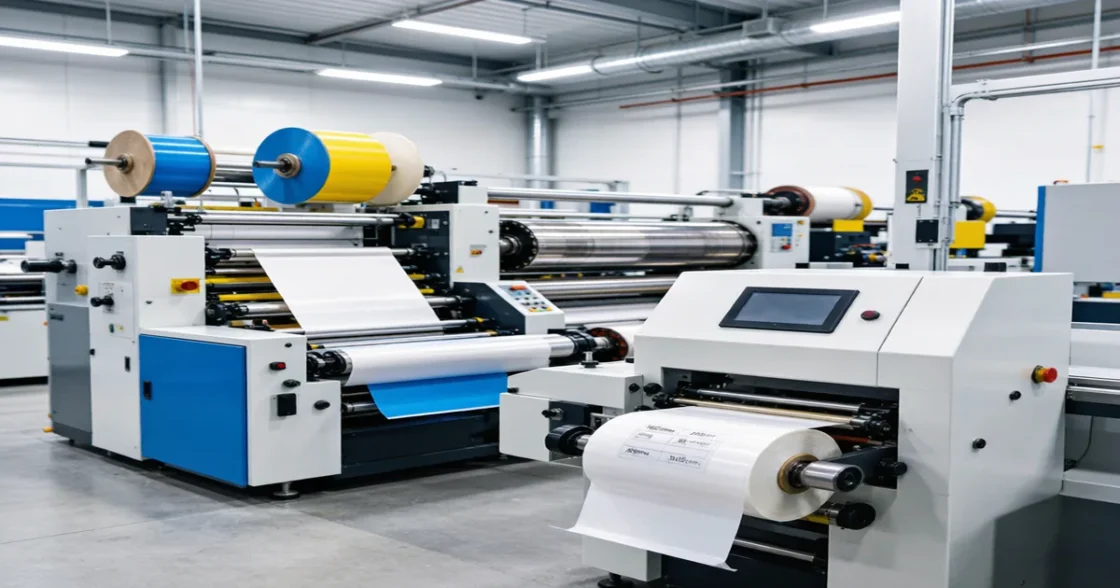
The second core area of the digital transformation of the packaging industry is printing. Digital printing requires no plate-making, cutting lead time from 15–25 days to 3–7 days, and is the technical foundation that makes “small-batch customization” possible.
| Metric | Traditional gravure printing | Digital printing | Digital value |
|——|————-|———-|———-|
| Minimum order quantity | 5,000–10,000 units | From 1 unit | Small batches feasible |
| Lead time | 15–25 days | 3–7 days | Fast response |
| Design-change cost | CNY 6,000–20,000 | CNY 0 | Flexible trial and error |
| Personalization | Not supported | Supported | Marketing innovation |
Key trend: The per-sheet cost of digital printing is falling rapidly and is expected to reach parity with gravure printing for small-batch (<5,000 units) scenarios by 2027.
ROI Analysis of Digital Printing Equipment
Taking the common HP Indigo 20000 as an example:
| Item | Data |
|——|——|
| Equipment investment | CNY 3,500,000–5,000,000 |
| Annual capacity | 5 million impressions |
| Per-sheet cost | CNY 0.15–0.35 (depending on substrate) |
| Payback period | 2.5–3.5 years (at full capacity) |
> Investment advice: If small-batch orders (<5,000 units) account for more than 30% of your business, the ROI on digital printing equipment is worthwhile.
Smart Factories: From “Manufacturing” to “Intelligent Manufacturing”
The Ultimate Goal of Packaging Industry Digital Transformation
The smart factory is the ultimate goal of the digital transformation of the packaging industry. Through technologies such as the Internet of Things (IoT), big-data analytics, and digital twins, it achieves intelligence across the entire production process.
| Smart factory module | Function | Value |
|————–|——|——|
| Production planning APS | Automatic scheduling, capacity optimization | Lead time reduced 20%–30% |
| Quality traceability QMS | Full-process traceability, real-time alerts | Defect rate reduced 40%–60% |
| Equipment monitoring TPM | Predictive maintenance, OEE optimization | Equipment utilization up 15%–25% |
| Warehouse management WMS | Smart inbound, automatic outbound | Inventory accuracy >99% |
The Smart Factory Build Path
Phase 1 (6–12 months): Digital foundation building
– ERP system upgrade (supports small-batch orders)
– Production equipment networking (data collection)
– Digitalization of the quality management system
Phase 2 (12–24 months): Intelligent applications
– AI scheduling system
– Digital twin (virtual factory)
– Predictive maintenance
Phase 3 (24–36 months): Ecosystem collaboration
– Integration with client systems (automatic ordering)
– Integration with supplier systems (automatic replenishment)
– Full-chain data interconnection
If your company also needs digital solutions for flexible packaging (such as digital printing and small-batch customization of flexible packaging), you may also explore our sister brand’s food flexible packaging digital platform for integrated digital transformation advice spanning rigid and flexible packaging.
Case Studies on Packaging Industry Digital Transformation
Case 1: The Digitalization Journey of a Well-Known E-commerce Packaging Company
Background: The company mainly produces e-commerce express packaging, with order characteristics of “multiple batches, small volumes, urgent delivery.”
Digital transformation:
1. Online design tools: Customers design by themselves; design cycle cut from 3 days to 2 hours
2. Digital printing lines: 5 HP Indigo presses covering 90% of small-batch orders
3. Smart scheduling system: APS automatic scheduling cuts lead time from 7 days to 3 days
Results:
– Sales up 85% (2023–2025)
– Net profit margin up 6 percentage points
– Customer satisfaction up from 78% to 94%
Case 2: A Traditional Packaging Company’s “Counterattack”
Background: A traditional gravure printing company with 90% of orders being high-volume and small-batch orders declined.
Digital transformation:
1. Add digital printing lines: Serve small-batch orders
2. AI design tools: Improve design efficiency
3. Online ordering platform: Customers place and track orders by themselves
Results:
– Small-batch order share up from 5% to 35%
– Overall gross margin up 8 percentage points
– Customer count up 120%
Strategic Recommendations for Packaging Industry Digital Transformation
Digital Transformation Paths for Companies of Different Sizes
| Company size | Digitalization focus | Investment advice | Time window |
|———-|————|———-|———-|
| Small (<50 people) | Online design + digital printing | CNY 500,000–1,000,000 | 6–12 months |
| Medium (50–200 people) | Smart scheduling + quality traceability | CNY 2,000,000–5,000,000 | 12–24 months |
| Large (>200 people) | Full-chain digitalization | CNY 10,000,000–30,000,000 | 24–36 months |
Common Pitfalls in Digital Transformation
1. Blindly deploying systems: Buying ERP, MES, and WMS without interconnecting data, creating “data silos”
2. Ignoring employee training: Systems are deployed but staff cannot use them, reducing efficiency instead
3. Expecting immediate results: Digital transformation is “slow work” and usually takes 18–24 months to show clear results
Future Trends: Directions of Packaging Industry Digital Transformation
Five Major Trends for 2026–2030
1. Full adoption of AI design: 80% of packaging design will be AI-assisted
2. Digital printing goes mainstream: Digital printing share of small-batch orders (<5,000 units) exceeds 60%
3. Digital twin standardization: Large packaging companies widely establish digital twin systems
4. Blockchain traceability: High-end food and pharmaceutical packaging widely adopt blockchain traceability
5. Carbon-neutrality digitalization: Packaging carbon footprints become fully traceable and optimizable
An Action Framework for Packaging Industry Digital Transformation
Reviewing the full picture of the digital transformation of the packaging industry, companies need to advance simultaneously on three levels:
1. Technology level: AI design + digital printing + smart factory, rolled out progressively
2. Organization level: Build a digital team and cultivate digital talent
3. Strategy level: Treat digitalization as a core competitiveness, not just “icing on the cake”
> The digital transformation of the packaging industry is not an “option” but a “must” — better late than never, but better now than later.
For specific digital transformation solutions, please refer to our [Custom Plastic Packaging End-to-End Guide](#).
📞 Need professional packaging digital transformation consulting? Contact the HASUPACK expert team for a digital transformation roadmap tailored to your company size and order structure.
—
*References: The China Packaging Federation’s “2025 Packaging Industry Digital Development Report,” the German Mechanical Engineering Industry Association (VDMA) “Packaging 4.0: The Digital Transformation of the Packaging Industry,” and HP’s “Digital Printing in Packaging: 2025 Market Report.”*