Plastic Restriction Policy Landscape for 2025-2026
From 2025 to 2026, the plastic restriction policy in China entered a critical phase of comprehensive deepening. Plastic pollution control policies at the national level are being implemented at an accelerated pace. At the local level, provinces and municipalities have introduced stricter implementation rules. First-tier cities such as Beijing, Shanghai, Guangzhou, and Shenzhen are advancing plastic restriction measures across different sectors. Hainan Province, as a national ecological civilization pilot zone, has taken the lead in achieving the phased goal of an island-wide plastic ban, accumulating rich experience in policy implementation.
A point worth special attention is that in the second half of 2025, multiple provinces and municipalities also introduced new policies on regulating the market order of degradable plastics, focusing on cracking down on false labeling of degradable performance. At the same time, eastern coastal provinces such as Zhejiang and Jiangsu, while accelerating plastic restriction legislation, also introduced supporting fiscal subsidies and tax preferences for eco-friendly packaging enterprises. Overall, the enforcement of the plastic restriction policy is expanding from first-tier cities to second- and third-tier cities, and extending from the food-service and retail sectors to express delivery, agriculture, hotels, and other fields. The continuous expansion of policy coverage means more enterprises and industries will be directly affected.
Detailed Ban and Restriction Lists for Key Industries and Products
At present, the key control areas of the plastic restriction policy focus on the following industries and product categories. First, non-degradable plastic bags: the full prohibition of non-degradable plastic bags in the food-service, retail, e-commerce, and delivery sectors, with alternatives including degradable plastic bags (must comply with standard GB/T 38082-2019), non-woven bags, and paper bags. Second, single-use plastic tableware: non-degradable single-use plastic tableware used in the food-service industry (including knives, forks, spoons, straws, etc.) is prohibited, with alternatives being degradable tableware or reusable tableware. Third, express packaging: the express industry needs to gradually phase out non-degradable plastic packaging bags and tape, and promote the use of degradable packaging, reusable packaging, and paper packaging. Fourth, agricultural mulch film: agricultural mulch film must meet the requirements of national standard GB/T 35795-2017, and the use of fully biodegradable mulch film is encouraged. For the specific technical parameters and performance indicators of degradable materials, please refer to the material interpretation articles in the Packaging Knowledge column.
In addition to the main categories above, some provinces and cities have expanded to other plastic products. For example, Shanghai brought single-use hotel plastic amenities within the scope of bans and restrictions, including single-use plastic combs, toothbrushes, shower caps, etc. Guangzhou focuses on special rectification of non-degradable plastic bags in markets. Beijing is also promoting the greening of express packaging, requiring express enterprises to gradually increase the proportion of reusable packaging. These ban and restriction measures across different regions and fields form a multi-dimensional plastic pollution control network, which enterprises need to consider comprehensively when formulating compliance strategies.
Market Landscape and Development Trends of Alternative Materials
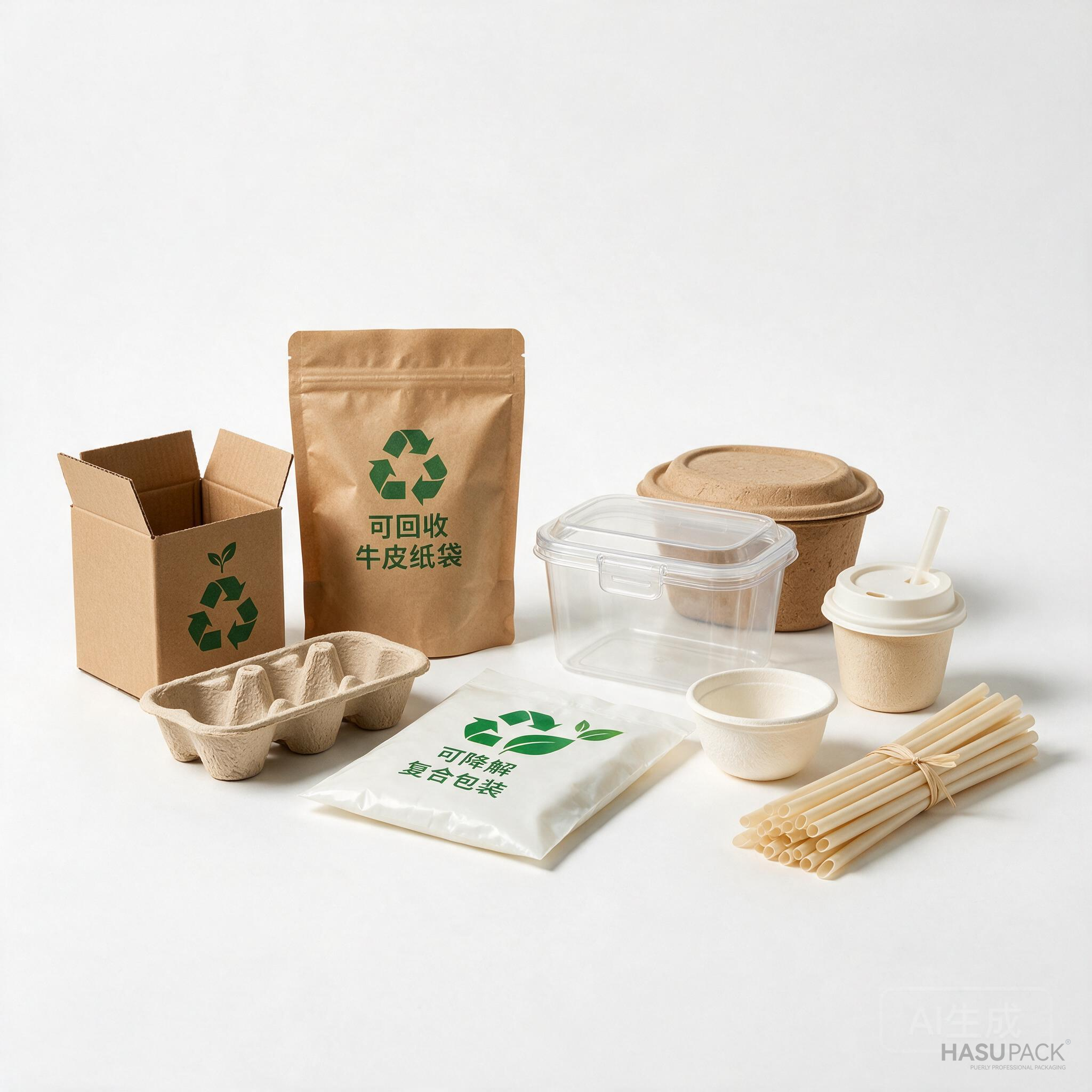
The plastic restriction policy has spawned a huge alternative material market. The main alternative materials currently on the market include PLA (polylactic acid), PBAT (polybutylene adipate terephthalate), PBS (polybutylene succinate), and PHA (polyhydroxyalkanoate), among others. Among them, PLA is the most widely used biodegradable plastic, with excellent transparency and processability, mainly suitable for rigid packaging and transparent films. PBAT is the preferred material in the flexible packaging field, often blended with PLA to improve flexibility and processability. PHA, as a third-generation biodegradable material, has good marine degradability but higher production costs. Starch-based plastics, as the lowest-cost degradable option, have found certain applications in garbage bags and agricultural mulch film.
However, the alternative material market still faces multiple challenges such as insufficient capacity, high prices, and performance limitations. Although domestic PLA annual capacity is growing rapidly, it is still difficult to meet market demand, and some high-end grades rely on imports. PBAT production technology has a high threshold, and product quality stability still needs improvement. At the same time, the heat resistance, barrier properties, and printability of alternative materials still have room for improvement. To learn about HASUPACK products and services in the eco-friendly packaging field, please visit the Custom Packaging service for more information.
Compliance Pathways and Strategy Recommendations for Enterprises
Facing the continuous tightening of the plastic restriction policy, food enterprises and packaging enterprises should actively adopt the following compliance measures. First, conduct a comprehensive packaging compliance review, confirming one by one whether currently used packaging materials fall within the scope of bans and restrictions, and evaluating the feasibility and cost of alternatives. Second, formulate a practical eco-friendly packaging transformation plan, replacing non-degradable materials in phases and by category, prioritizing the replacement of high-risk categories. Third, establish partnerships with certified eco-friendly packaging suppliers to ensure that alternative materials meet the biodegradation performance requirements of national standards. It is recommended to request third-party test reports as verification.
Fourth, establish an internal policy tracking mechanism, assigning dedicated personnel to collect and analyze the plastic restriction policy dynamics of various provinces and cities, ensuring that enterprise compliance work has no blind spots. Fifth, actively participate in working meetings and training organized by industry associations and government departments to understand the latest policy trends and industry best practices. It is worth reminding that compliance is not only a legal requirement but also an important way for enterprises to fulfill social responsibility and enhance brand image. An increasing number of end consumers pay attention to the environmental attributes of packaging when choosing products, which provides a differentiated market positioning opportunity for enterprises that actively transform. To learn about HASUPACK eco-friendly product lines, please visit About HASUPACK for more information.
The plastic restriction policy in China is undergoing a transformation from single-use restriction to comprehensive plastic pollution control. Looking ahead, several important trends deserve attention. First, the plastic waste classification and recycling system will become more complete, and recyclability design of packaging will become a basic compliance requirement. Second, the extended producer responsibility system will be fully implemented in the plastic packaging field, and packaging producers need to be responsible for the full life-cycle environmental impact of their products. Third, a digital traceability system will be introduced into plastic packaging management, with every link from raw materials to end disposal being traceable. Fourth, international cooperation will be further strengthened, and China will actively participate in the formulation and implementation of global plastic pollution control agreements.