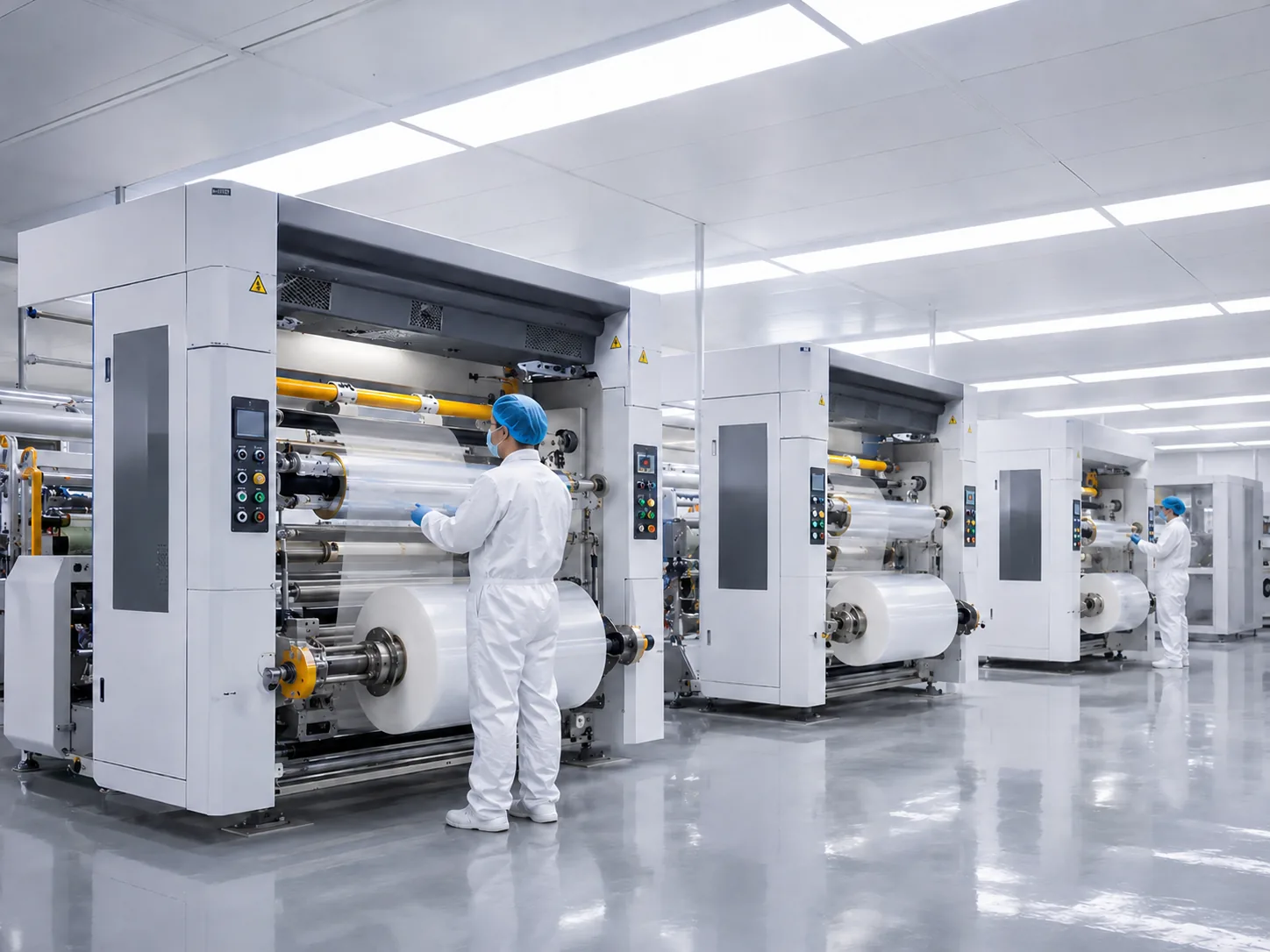
Medical packaging materials belong to medical devices that must be sterile upon leaving the factory, but “sterility” is not an inherent property of the product—it is the state maintained by the packaging system. A qualified medical package must continuously block microbial ingress throughout the entire chain of sterilization, transport, storage, and clinical use, until the moment of opening. This article outlines the core material-selection logic for medical packaging materials and provides a compliance practice guide for medical device manufacturers.
1. Dual Role of Medical Packaging Materials: Sterile Barrier + Transport Protection
Under the ISO 11607 framework, medical packaging is defined as a sterile barrier system (SBS), consisting of primary packaging (in direct contact with the device) and secondary packaging (outer box/carton). The primary packaging is the core—it must allow the sterilant to penetrate during sterilization and then completely block microorganisms until opened at the point of use.
Key judgment: Selecting medical packaging materials is essentially about balancing “sterilant penetrability” and “microbial barrier performance”—the two are naturally in tension, and a good material does the right thing at the right time.
2. Medical Grade Paper: The Classic Choice for EO and Steam Sterilization
2.1 Principle of Medical Grade Paper
Medical grade paper is the classic material for medical paper-plastic packaging. Its core feature is a porous fiber structure—pores large enough to allow sterilant gas (EO ethylene oxide) or steam molecules to penetrate, yet fine enough to form a barrier that blocks bacterial spores (generally >0.3 μm) after sterilization is complete.
| Parameter | Typical Value | Significance |
|---|---|---|
| Basis Weight | 60—120 g/m² | Higher weight gives greater strength and better bacterial barrier |
| Porosity | 40%–60% | Affects sterilant penetration speed |
| Surface Water Absorptiveness (Cobb Value) | < 20 g/m² | Lower is better for strength retention after moisture exposure |
| Particle Shedding | < 100 particles/100 cm² | Lower means lower risk of device-surface contamination |
2.2 Common Laminate Structures of Medical Grade Paper + Film
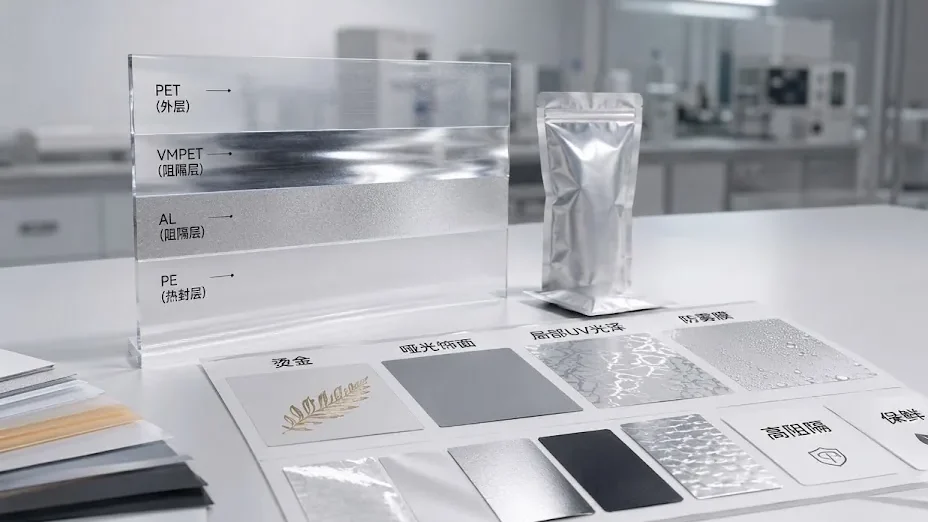
In real medical packaging, medical grade paper is rarely used alone; instead it is laminated with a plastic film to form a paper-plastic pouch:
[Medical Grade Paper Layer]  ← Sterilization gas penetration side, bacteria barrier side
[Heat-Seal Layer]    ← Critical seal-strength layer
[Plastic Film Layer]  ← Transparent viewing side, mechanical strength support
In this structure, the medical grade paper determines whether sterilization can occur and whether bacteria are blocked, while the plastic film determines transport durability and whether the device is clearly visible.
3. Tyvek: An Upgrade Choice for High-End Medical Devices
When devices are high-value, complex in shape, or require zero tolerance for particulate contamination, Tyvek is often a better choice than medical grade paper.
Tyvek is a high-density polyethylene fiber material developed by DuPont. It looks like paper but performs more like a nonwoven fabric. Compared with medical grade paper:
| Comparison Dimension | Medical Grade Paper | Tyvek |
|---|---|---|
| Microbial barrier | Excellent | Superior (finer fibers) |
| Liquid penetration resistance | Fair | Excellent |
| Tear resistance | Fair (fails when wet) | Outstanding |
| Particle shedding | Present (controlled) | Extremely low |
| Cost | Lower | Higher (about 3—5 times) |
| Applicable sterilization methods | EO, steam | EO, gamma, electron beam |
Selection recommendation: For ordinary disposable devices (syringes, dressings), medical grade paper is sufficient; for implants, high-end surgical instruments, and premium equipment exported to Europe and America, upgrading to Tyvek is recommended.
4. Matching Matrix: Sterilization Methods and Packaging Materials
Different sterilization methods impose very different requirements on packaging materials; choosing the wrong material can lead to sterilization failure or material damage during sterilization.
| Sterilization Method | Penetration Mechanism | Requirements on Packaging | Recommended Material Combination |
|---|---|---|---|
| EO (ethylene oxide) | Gas molecule diffusion | Breathable, tolerates EO residue off-gassing | Medical paper + PE film, Tyvek + PET/PE |
| Steam sterilization | High-temperature saturated steam | High-temperature resistance (121—134°C), moisture resistance | Special high-temperature medical paper + CPP film |
| Gamma irradiation | High-energy ray penetration | Radiation resistant, no yellowing, no embrittlement | Tyvek + radiation-modified PET/PE |
| Electron beam (E-beam) | Electron beam penetration | Same as above; dose generally lower than gamma | Tyvek + PET/PE |
| Plasma (hydrogen peroxide) | Low-temperature plasma diffusion | Good breathability, no fiber shedding | Tyvek + high-barrier film |
5. Core Points of ISO 11607 and FDA Compliance
Medical packaging is not simply about “looking good”; it must meet the requirements of ISO 11607-1/2 and local regulations (FDA 21 CFR Part 820, NMPA Medical Device Production Quality Management Specification).
5.1 Required Validation Items
| Validation Item | Standard | Purpose |
|---|---|---|
| Microbial barrier test | ISO 11607-1 Annex B | Confirm SBS bacterial barrier effectiveness |
| Seal strength test | ASTM F88/F88M | Confirm heat-seal edges do not break in transit |
| Dye penetration test | ASTM F1929 | Detect minute seal leaks |
| Accelerated aging test | ASTM F1980 | Verify bacterial barrier performance within shelf life |
| Transport simulation test | ASTM D4169 | Verify package integrity under real logistics conditions |
5.2 Common Compliance Pitfalls
- Seal parameters not validated: Materials from different batches and different sealing machines require re-validation of heat-seal temperature/pressure/dwell time; they cannot be carried over directly.
- Missing accelerated-aging data: During registration submission, the basis for shelf life is often challenged because the accelerated aging test was not performed per ASTM F1980.
- Material changes not re-validated: When the supplier or basis weight changes but the SBS validation report remains outdated—this is a frequent FDA on-site audit finding.
6. HASUPACK’s Custom Medical Packaging Capabilities
HASUPACK has a complete material matrix and compliance support capability in the medical packaging field:
- Material options: Medical grade paper (60—120 g/m²), Tyvek 1059B/1073B, sterilization laminate films in various specifications
- Pouch formats & processes: Paper-plastic pouch, header bag, stand-up pouch, blister lidding material
- Sterilization compatibility: Material combination solutions covering EO, gamma, electron beam, steam, and plasma
- Compliance support: Can assist with material declarations of conformity (DoC), accelerated aging test coordination, and seal-process validation parameter recommendations
7. Medical Packaging Material Selection Checklist
Before formally launching material tendering or sample confirmation, it is recommended to check item by item:
- Device classification: Class I/II/III? Risk level determines validation depth
- Sterilization method: EO/steam/gamma/plasma? Determines material temperature and radiation resistance grade
- Intended shelf life: 1 year/3 years/5 years? Determines accelerated aging test design
- Target market: Domestic/NMPA, USA/FDA, EU/CE? Determines which compliance documents are needed
- Package format: Paper-plastic pouch/stand-up pouch/blister card? Determines equipment and tooling investment
- Material traceability: Can the supplier provide a COA (Certificate of Analysis) for each batch?
HASUPACK has deep expertise across four major sectors—food, industrial, medical, and daily-use—and its medical packaging team is familiar with full-chain ISO 11607 compliance requirements, offering one-stop support from material selection, pouch design, and sample validation through to volume delivery.
To learn more about compliance standards for medical device sterile packaging, refer to Medical Device Sterile Packaging Selection and Compliance Guide: From ISO 11607 to Materials and Processes; for the application of high-barrier materials in medical scenarios, read further in High-Barrier Packaging Materials: Technical Comparison and Application Selection Guide.