15th Five-Year Plan for the Packaging Industry Explained: Green Transition and Smart Manufacturing (2026–2030)
The 15th Five-Year Plan for the Packaging Industry was officially issued by the General Office of the State Council in early 2026. As a guiding document for the development of the packaging industry from 2026 to 2030, this plan sets out new development requirements for the packaging sector against the backdrop of the “dual-carbon” goals and the restructuring of global supply chains.
According to estimates by the China Packaging Federation, China’s total packaging industry output exceeded CNY 1.5 trillion in 2025, yet the sector remains “large but not strong”: import dependence for high-end packaging materials reached 35%, the market penetration of degradable packaging was below 18%, and the digitalization rate of small and medium-sized enterprises was under 25%. The 15th Five-Year Plan for the Packaging Industry addresses these pain points with a systematic solution.
Core Objectives of the 15th Five-Year Plan for the Packaging Industry
Green and Low-Carbon: Policy Upgrade from “Plastic Restriction” to “Plastic Substitution”
For the first time, the plan lists “green transformation of packaging” as a binding indicator. Specific targets include:
| Indicator | 2025 baseline | 2030 target | Annual average improvement |
|——|————-|————-|———-|
| Market penetration of degradable packaging | 18% | ≥50% | +6.4% |
| Recycling rate of packaging materials | 32% | ≥60% | +5.6% |
| Carbon emission intensity of the packaging industry | Baseline 100 | Decrease by ≥28% | -5.6%/year |
| Share of mono-material packaging | 22% | ≥55% | +6.6% |
> Policy signal: The plan clearly states that “from 2028, the proportion of degradable materials used in e-commerce express packaging must not fall below 40%,” which will directly affect product mix adjustments at plastic packaging companies.
How Companies Should Respond: From Material Substitution to Full Life-Cycle Design (Requirements of the 15th Five-Year Plan)
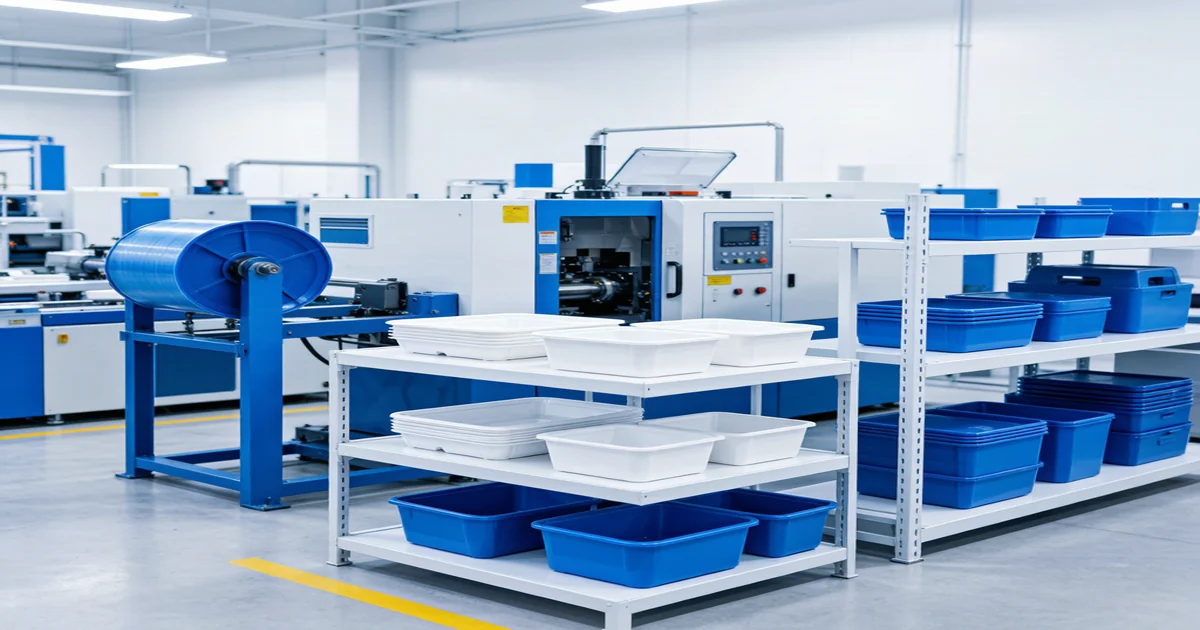
The plan requires packaging companies to establish a “cradle-to-cradle” full life-cycle assessment system. For custom plastic packaging companies, the most direct response paths are:
1. Material side: Develop PLA/PBAT blend modification technology to improve the heat resistance and barrier properties of degradable materials
2. Design side: Promote mono-material design to improve recycling compatibility
3. Production side: Introduce photovoltaic + energy storage systems to reduce the carbon footprint per product
Smart Manufacturing: The Digital Engine of the Packaging Industry
Digital Transformation Goals in the 15th Five-Year Plan for the Packaging Industry
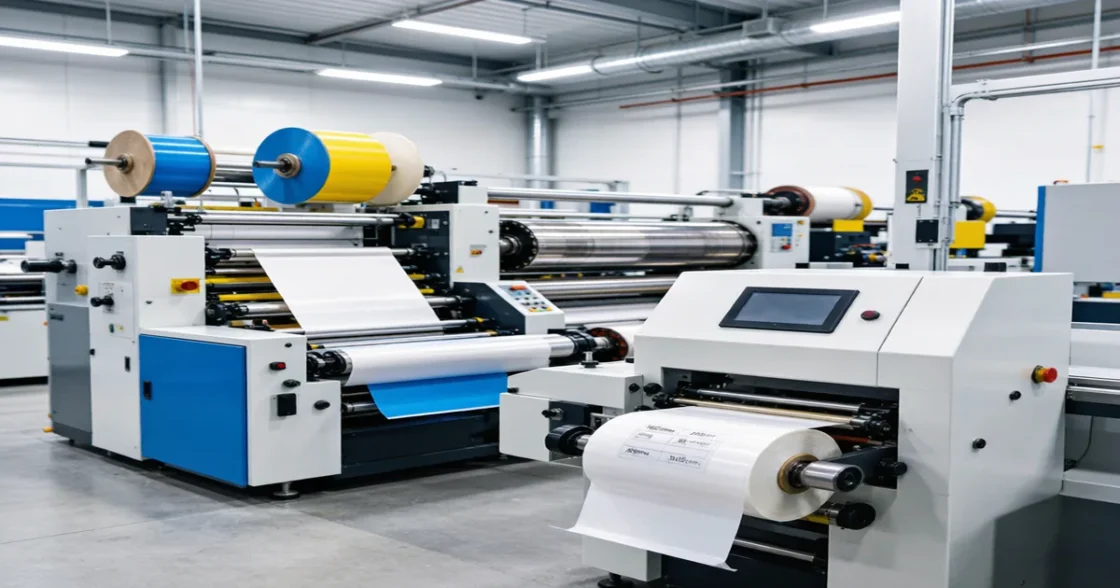
The plan identifies “smart manufacturing” as the core direction of technological transformation in the packaging industry. Key tasks include:
– Smart factory standards: Formulate and promote smart factory evaluation standards for the packaging industry before 2028, and cultivate 100 benchmark enterprises
– Wider adoption of digital printing: Reduce the share of gravure printing capacity from the current 78% to 55%, and increase the share of digital printing to 30%
– Industry chain collaboration platform: Build a national-level packaging industry internet platform to digitize the entire order–production–logistics chain
Digital Transformation Path for Plastic Packaging Companies (Key Tasks of the 15th Five-Year Plan)
| Transformation stage | Key tasks | Investment range | Payback period |
|———-|———-|———-|———-|
| Basic digitalization | ERP + MES system implementation | CNY 500,000–2,000,000 | 2–3 years |
| Intermediate intelligence | Digital printing equipment + automated inspection | CNY 3,000,000–8,000,000 | 3–4 years |
| Advanced intelligence | Flexible production line + AGV logistics | CNY 10,000,000+ | 4–6 years |
Key note: The plan clearly provides fiscal subsidies of up to 15% for smart manufacturing upgrades in the packaging industry. Companies should complete project applications before 2027 to benefit from the policy window.
Circular Economy: From “End-of-Pipe Treatment” to “Source Reduction”
Highlights of the Circular Economy in the 15th Five-Year Plan for the Packaging Industry
For the first time, the plan proposes a binding indicator for “packaging circularity rate,” supported by three core systems:
1. Expansion of the EPR (Extended Producer Responsibility) system: Extend from the current e-commerce express sector to the two major fields of food packaging and household-chemical packaging, fully implemented in 2028
2. Packaging deposit-return system pilot: Select 5 cities in the Yangtze River Delta and the Pearl River Delta to implement a deposit-return system for plastic beverage bottles and takeaway food containers
3. Green packaging certification system: Establish a national-level green packaging product certification; certified products receive preferential treatment in government procurement
Special Notes for Export Companies (Alignment of the 15th Five-Year Plan with the EU PPWR)
The plan also aligns with the EU’s PPWR (Packaging and Packaging Waste Regulation) and requires export packaging companies to:
– Ensure recyclable content of packaging materials is ≥55% (2030 target)
– Reduce unnecessary multi-layer laminate structures and prioritize mono-material designs
– Label the “recyclability grade” (Grade A–F) on outer packaging
If your products are mainly aimed at the European market, we recommend reviewing our [Export Packaging Compliance Guide](#) to prepare your technology and certifications in advance.
Regional Layout: New Trends in Industrial Transfer and Cluster Development
Regional Strategy in the 15th Five-Year Plan for the Packaging Industry
The plan provides clear guidance on the regional layout of the packaging industry:
| Region | Development positioning | Key industries |
|——|———-|———-|
| Yangtze River Delta | High-end packaging material R&D base | Biodegradable materials, high-barrier films |
| Pearl River Delta | Smart packaging equipment manufacturing center | Digital printing equipment, smart filling lines |
| Central and western China | Industrial transfer receiver zone | Mid-range plastic packaging, corrugated boxes |
| Beijing-Tianjin-Hebei | Green packaging innovation demonstration zone | Degradable materials, circular packaging systems |
Industrial transfer signal: The plan clearly supports the orderly transfer of packaging capacity from eastern China to central China (Henan, Hubei, and Sichuan). The land and energy cost advantages of the receiving regions will gradually emerge over the next five years.
Conclusion: How Packaging Companies Should Respond to the New Requirements of the 15th Five-Year Plan
Reviewing the core content of the 15th Five-Year Plan for the Packaging Industry, packaging companies need to plan ahead in the following three directions:
1. Green material deployment — The 40% mandatory degradable-material ratio for e-commerce packaging takes effect in 2028; material substitution R&D must start now
2. Digital transformation — The smart factory subsidy window closes before 2027; late applications may miss fiscal support
3. Circular economy compliance — The expanded EPR system takes effect in 2028; exporters must simultaneously meet EU PPWR requirements
> The plan is not a “paper blueprint,” but the survival code for the packaging industry over the next five years. Companies that plan ahead will take the initiative in the next round of industry reshuffling.
📞 Need professional packaging compliance consulting? Contact the HASUPACK expert team for packaging upgrade advice in the context of the 15th Five-Year Plan.
Meanwhile, if your products also involve food flexible packaging (such as tea bags, coffee pouches, etc.), you may also explore our sister brand’s food flexible packaging customization platform for integrated compliance advice covering both rigid and flexible packaging.
—
*References: The State Council’s “15th Five-Year Plan for the Development of the Packaging Industry (2026–2030)”, the China Packaging Federation’s “2025 Packaging Industry Development Report”, and the European Commission’s PPWR regulatory text (entered into force in 2025).*