





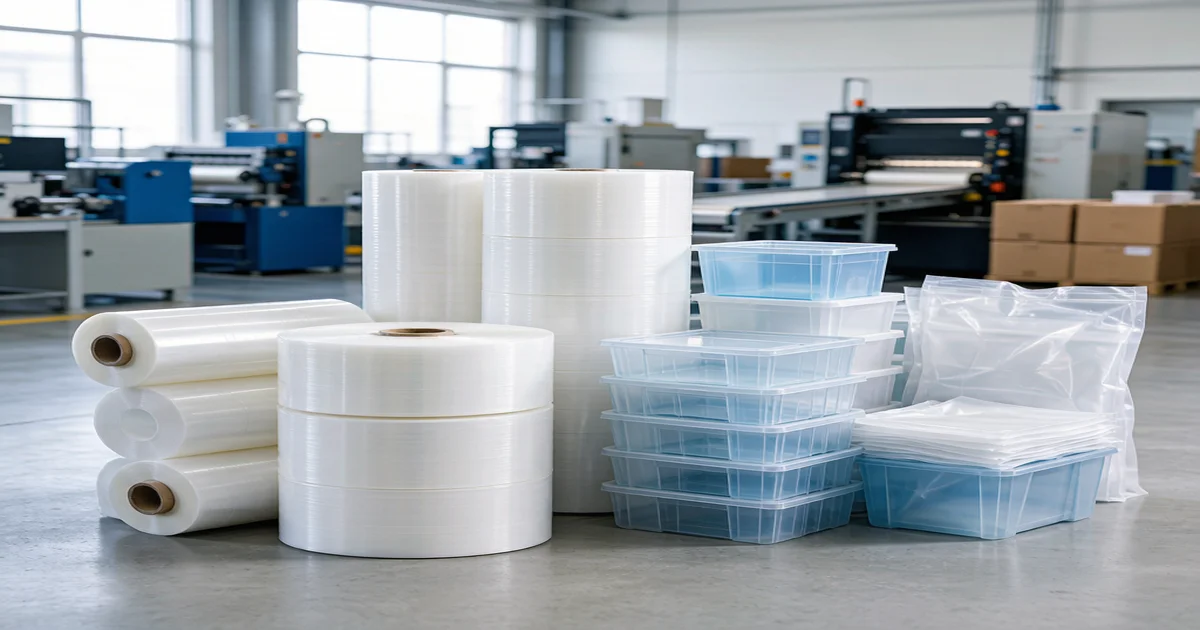
Custom plastic packaging may seem simple—sketch a design, pick a material, find a factory—but brands that have actually been through the process know the pitfalls are far more numerous than expected. From unclear requirements causing design rework, to samples passing but mass production drifting out of spec, to delayed delivery missing the new-product launch window… every misstep means both time and money lost.
According to the China Packaging Federation, in 2024, 28% of delivery delays were caused by poor packaging customization process management, with average extra costs of about CNY 15,000 per project. Drawing on hands-on industry practice, this article breaks down the 6 key steps of custom plastic packaging to help brands build a systematic understanding from requirements to delivery.
Step 1 of Custom Plastic Packaging: Requirements Clarification—Know “What to Pack, How to Sell”
Before contacting any packaging factory, answer the following 5 questions. This information is the starting point for the factory’s proposal; missing any item leads to inaccurate quotes or off-target proposals:
1. What product to pack? Product form (solid/liquid/powder), weight, dimensions, pH value, oily or not?
2. How to sell? E-commerce (needs drop resistance) or offline retail (needs shelf display)? Need a hang hole?
3. Shelf life? Short (within 7 days) or long (over 12 months)? Determines barrier requirements
4. Expected volume? First trial production or steady mass production? Estimated annual usage?
5. Budget range? Any target unit price? Willing to pay a green premium?
Practical tip: It is recommended to organize the above information with a one-page “Packaging Brief,” including product photos and competitor packaging references, which greatly improves communication efficiency with the factory.
> A good requirements document can save you at least 2 rounds of rework.
Step 2 of Custom Plastic Packaging: Material Selection—the Foundation of Packaging Performance
The material choice for custom plastic packaging directly determines the protective performance, appearance quality, and cost range of the packaging. Common plastic packaging materials fall into the following categories:
Custom Plastic Packaging: Flexible Packaging Materials (Bags/Film) Selection
| Material | Properties | Typical applications | Reference cost |
|——|——|———-|———-|
| BOPP/PE | Good clarity, moisture resistant | Bread bags, candy bags | Low |
| PET/PE | High stiffness, fine printing | Snack bags, nut bags | Low–medium |
| PET/AL/PE | High barrier, light blocking | Coffee bags, tea bags | Medium |
| PA/PE | Puncture resistant, low-temperature resistant | Frozen food, vacuum meat | Medium–high |
| PLA/PBAT | Biodegradable, eco-friendly | Organic food, eco brands | High |
Custom Plastic Packaging: Rigid Packaging Materials (Boxes/Cans/Cups) Selection
| Material | Properties | Typical applications | Reference cost |
|——|——|———-|———-|
| PET (thermoformed) | High clarity, formable | Electronic trays, food boxes | Medium |
| PP (injection molded) | Heat resistant, microwave safe | Meal boxes, cup lids | Low–medium |
| HDPE (blow molded) | Chemical resistant, tough | Daily-chemical bottles, oil cans | Medium |
| PS | High hardness, brittle | Yogurt cups, disposable cups | Low |
Core selection principle: First define functional requirements (barrier, temperature resistance, drop resistance), then choose the most cost-effective solution that meets those functions. Never compromise protection for cost savings—the cost of scrapped packaging far exceeds the material price difference.
Step 3 of Custom Plastic Packaging: Structural Design and Printing Process
After materials are set, move to structural and visual design. This stage requires close collaboration between packaging engineers and graphic designers.
Key Points of Plastic Packaging Structural Design
– Flexible pouch formats: three-side seal, four-side seal, stand-up pouch, resealable zipper pouch, shaped pouch—pouch format affects filling efficiency and shelf display
– Rigid packaging structure: thermoforming thickness (0.3–1.0 mm), rib reinforcement, stacking structure
– Sealing method: heat sealing, resealable zipper, tear notch, one-way degassing valve (essential for coffee packaging)
Plastic Packaging Printing Process Selection
| Printing method | Suitable volume | Advantages | Disadvantages |
|———-|———-|——|——|
| Gravure printing | 10,000+ | Saturated color, low cost | High plate-making cost (CNY 800–2,000/color) |
… [truncated]





