





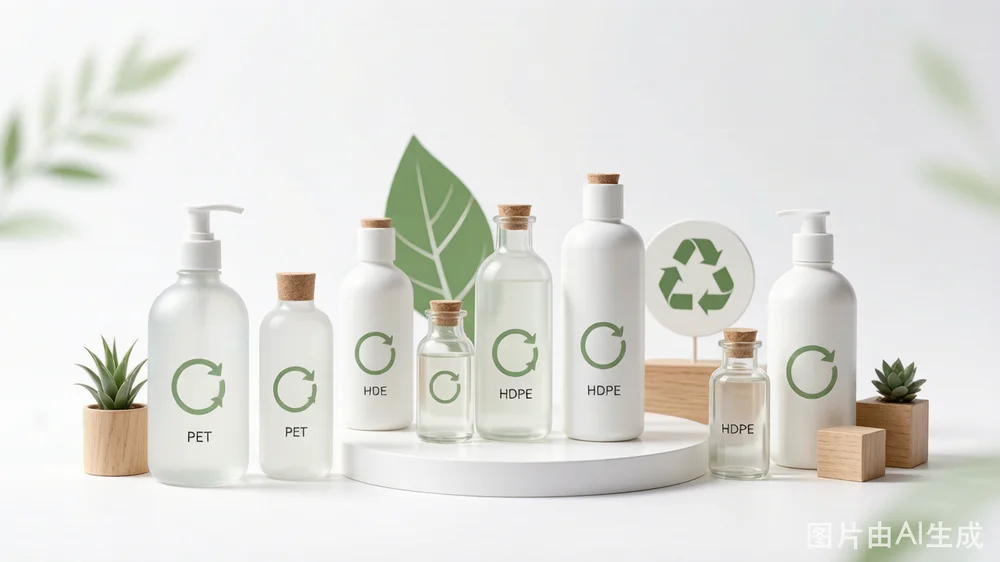
The export packaging market in 2026 is no longer an era where ‘low price and fast lead time’ alone win orders. The RFQs from European customers now include a few extra lines: recycled content certificates, carbon footprint reports, PPWR compliance statements—the era of ESG compliance in the packaging industry has arrived.
I. Why Are Packaging Companies Suddenly Caring About ESG?
Three driving factors combined have turned ESG compliance in the packaging industry from ‘something only big companies do’ into ‘something small and medium export companies must also face’:
- Hard regulatory constraints — The EU PPWR (Packaging and Packaging Waste Regulation) formally took effect at the end of 2025 and entered a critical enforcement period in 2026. It sets mandatory requirements for recycled content, recyclability design, and labeling of plastic packaging. Non-compliant products cannot enter the EU market.
- Buyer-driven propagation — Global brands such as Walmart, Unilever, Nestlé, and L’Oréal have publicly committed to ESG goals (e.g., achieving 100% recyclable packaging or containing 30% recycled material by 2025/2030). These commitments cascade down the supply chain to packaging suppliers.
- Approaching carbon tariff — The EU CBAM (Carbon Border Adjustment Mechanism), although covering steel, cement, and other industries in its first phase, has already listed plastics and packaging materials as the next expansion target. Companies that prepare their carbon footprint accounting early will gain a first-mover advantage.
II. Three Major Regulations Export Packaging Must Watch in 2026
1. EU PPWR — Mandatory Recycled Content Ratio
The most impactful clause of PPWR for the entire packaging industry is Article 7: minimum recycled content in plastic packaging. The specific requirements are as follows:
| Packaging Category | 2030 Recycled Content Requirement | 2040 Recycled Content Requirement |
|---|---|---|
| Sensitive-contact category (e.g., food-grade PET bottles) | 30% | 50% |
| Single-use plastic beverage bottles | 30% | 65% |
| Other plastic packaging (non-sensitive contact) | 35% | 65% |
What does this mean? If your customer is a food brand, the packaging bottles, pails, and pouches they purchase must contain a certain proportion of post-consumer recycled plastic (PCR) starting in 2030. And supply chain preparation cannot be done overnight—sourcing PCR material, verifying food-contact safety, and establishing traceability codes all require 2–3 years of lead time.
2. Carbon Footprint Disclosure — From ‘Bonus’ to ‘Must-Have’
More and more European retailers and brands require suppliers to provide a Product Carbon Footprint (PCF) report. France has taken the lead with a mandatory ‘environmental labeling’ system, and Germany and the Netherlands are following.
For packaging companies, carbon footprint accounting typically includes:
- Raw material production stage (carbon emissions from resins, masterbatch, additives)
- Manufacturing stage (energy consumption from injection molding/blow molding/extrusion)
- Transportation stage (from factory to customer warehouse)
- End-of-life stage (recycling or incineration)
From our experience: most packaging companies can reduce their product carbon footprint by 20%–30% by switching part of their production lines to green electricity, which is a significant differentiator in bidding.
3. Design for Recyclability — Not ‘Can It Be Recycled’ but ‘How Easily’
PPWR introduces the concept of ‘recyclability grade,’ from A to E in five levels:
- Grade A (≥95% recyclable): mono-material, colorless transparent PET/HDPE, easy to separate
- Grade B (90%–95%): contains a few labels but separable
- Grade C (80%–90%): slightly colored or multi-material but separable
- Grade D/E (below 80%): multi-material laminate, dark coloring, inseparable components—restricted from use starting in 2030
Key reminder: If your customers still use packaging with ‘dark bottle bodies + multi-layer labels + hot foil decoration,’ helping them find a sustainable alternative is your core value-added service as a supplier.
III. From ‘Passive Compliance’ to ‘Active Value Creation’
Many packaging companies see ESG compliance as a threshold they have to cross. But from another angle, it is actually an opportunity for differentiated competition.
Scenario 1: Your customer exhibits overseas and is asked by an end customer, ‘What is the recycled content of this packaging?’
If your customer has a PCR content declaration and traceability report you provided, doubts can be dispelled in 3 minutes. If your customer can only shake their head and say ‘I don’t know,’ the order may be lost in this exchange.
Scenario 2: International brands are conducting annual supplier ESG scoring
More and more global brands have established supplier ESG scoring systems, and packaging is an unavoidable part. If you can proactively provide:
— Product carbon footprint report
— Proof of recycled material usage ratio
— Factory energy structure data
you will not only avoid elimination but also widen the gap with peers in scoring.
Scenario 3: Capturing the ‘green packaging’ brand premium
A real data point: Nielsen research shows 66% of global consumers are willing to pay a higher price for sustainable brands. This 66% incremental value ultimately transmits back along the chain of brand → contract manufacturer → packaging supplier. Those who prepare first capture the first wave of dividends.
IV. HASUPACK’s ESG Practices
As a manufacturer with 15 years (to be confirmed) in customized plastic packaging, we have done the following on ESG compliance for the reference of peers and customers:
- Full-chain traceable material system — every step from upstream resin suppliers to finished products can be traced via batch codes, meeting the EU Digital Product Passport (DPP) requirement
- PCR material solution matrix — PCR solutions covering the three common food packaging materials PET, HDPE, and PP, with recycled content options from 10% to 50%, and verified for food-contact safety
- Lightweighting design capability — through wall thickness optimization and structural design, the per-unit product weight is reduced by 12%–18% while maintaining strength, directly cutting raw material and carbon footprint
- Green-electricity production lines — some lines are connected to photovoltaic power, reducing per-unit product carbon emissions by about 22%
What we are doing:
In the second half of 2026, HASUPACK will provide every customer with a carbon footprint estimate report and recyclability grade statement for their selected solution, so that every packaging order comes with built-in ESG compliance backing.
V. Three Pieces of Advice for Packaging Buyers in Preparation
Advice 1: Start Collecting Data Now
Don’t wait until a customer asks for a report to start scrambling. First clarify the packaging you currently procure: material type, supplier, approximate weight, annual usage. This step costs no money, only time.
Advice 2: Test ESG-Compatible Solutions in Parallel Early
You don’t need to switch to 100% PCR packaging in one step—start with one product line and run a small-batch test with a 20%–30% PCR solution. After confirming filling performance, seal integrity, and shelf life are fine, gradually scale up.
Advice 3: Write Your ESG Capability Into Your Brand Story
If your packaging already uses PCR material or lightweighting design, don’t hide it only in the technical spec sheet—put it on the product page, exhibition brochure, and LinkedIn posts, turning it into the brand’s market language. Consumers don’t buy ‘contains 30% recycled plastic’; they buy ‘I am doing the right thing for the planet.’
VI. Compliance Is the Floor, Not the Trump Card
ESG compliance deserves serious attention, but it should not be the end. Compliance only means ‘you are not worse than your peers’—but the part that is ‘better than your peers’ lies in whether you can anticipate trends early, save customers time, and turn complex regulations into simple, actionable solutions.
Having worked in the packaging industry for over a decade, we increasingly feel one thing: the market never lacks factories that can make identical products, but it always lacks partners who can think one step further for their customers.
Sustainable packaging is not a multiple-choice question but a required one. The only difference is: do you proactively write the answer and wait for the examiner to collect it, or are you rushed to scribble it on the spot.
Need an ESG packaging solution tailored to your product?
We offer free material selection consulting and carbon footprint estimation services.
service@hasupack.com | +86-176-0225-9808
Disclaimer: The regulatory information in this article is compiled from public sources as of June 2026 and is for reference only. For specific compliance requirements, please refer to the original Official Journal of the EU and the advice of professional legal counsel. HASUPACK is not responsible for any consequences of decisions made based on the information in this article.
© 2026 HASUPACK / HASUPACK. All rights reserved.





