





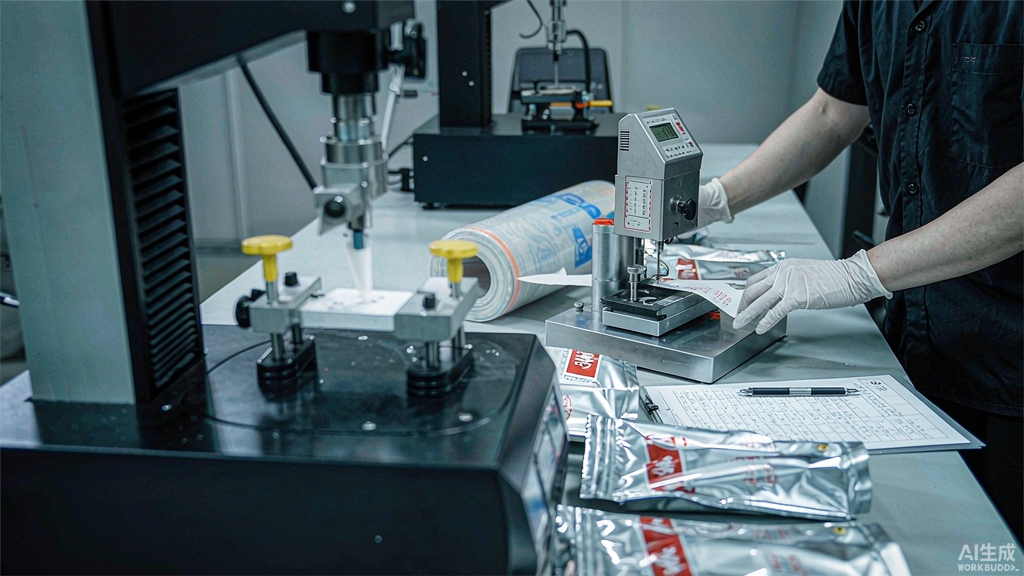
1. Why Flexible Packaging Incoming Inspection Deserves Its Own Standard
Many factories run very detailed incoming inspection for hardware and electronic components, yet for packaging bags they often just “count them in and run them on the line.” By the time seals leak or bags delaminate, the problem has spread from one batch of bags to a whole batch of finished goods. There are two practical reasons flexible packaging incoming inspection deserves its own standard.
1. Packaging Goes into Production on Arrival, So Problems Are Amplified Dozens of Times
A roll of laminated film or a batch of finished bags usually goes onto the filling and sealing machines the same or next day. Once packaging has a defect, the loss is not just the packaging itself: contents, labor, machine time, rework, and even customer claims all stack up. For a food factory producing 50,000 bags a day, a single line stopping for 2 hours to troubleshoot sealing can easily incur direct losses exceeding the purchase cost of the entire packaging batch.
2. Inspection Is a Cost Issue, Not a Process Burden
Making incoming inspection “100% inspection” is neither realistic nor economical. The truly effective approach is to pick the few items that decide success or failure, set quantifiable thresholds, and use statistical sampling to keep risk at an acceptable level. Done well, inspection actually reduces repeated line adjustments and batch returns–a clear cost-saving move.
When HASUPACK develops packaging solutions for food, industrial, and medical clients, it always writes the “acceptance standard” into the appendix of the technical agreement–agree first on how to judge, and later there is no bickering of “I think there is a problem, the factory says there is not.”
2. The 8 Must-Check Items for Flexible Packaging Incoming Inspection
The 8 items below cover the three dimensions of material, process, and appearance, and are a proven, cost-effective combination in the industry.
1. Thickness and Basis Weight: Check Deviation First, Then Uniformity
Thickness directly affects barrier, heat sealing, and stiffness. Measured with a mechanical thickness gauge per GB/T 6672, the common control requirement is that average thickness is not below the agreed value and single-point deviation is within +/-8% to +/-10%. Note that a bag with acceptable average thickness may still be unusable: if the same film roll shows “one side thick, one side thin” lateral deviation, it will cause uneven sealing and skewed bags on the machine. It is recommended to measure 5 to 9 points per roll (including both ends and the middle) and record the max and min values.
2. Lamination Bond Strength: Delamination Is a Fatal Defect
A laminated bag relies on adhesive to bond its layers; insufficient bond strength causes bubbling and delamination, directly leading to barrier failure. The test method follows GB/T 8808 (T-peel). A common internal control value is no less than 1.0 N/15mm; for high-temperature retort and boiling-water products, the internal control is usually raised to 1.5 to 2.0 N/15mm or above. The peel test must pay special attention to whether strength drops after retorting or after contact with contents–some adhesives have good initial strength but drop markedly after boiling.
3. Heat-Seal Strength and Hot Tack: The Seal Is the Last Line of Defense
Heat-seal strength is tested per QB/T 2358; for ordinary food bags the common control range is 15 to 35 N/15mm, with heavy-duty and liquid packaging requiring higher. Besides strength, also look at “hot tack”: the seal’s ability to resist impact from the contents before it has cooled. On vertical form-fill-seal machines, films with poor hot tack show seals being pushed open by the contents–especially noticeable on high-speed machines.
Further reading: heat-seal windows differ greatly between materials; read together with our heat-sealing temperature guide: parameters and setup tips for different packaging materials.
4. Barrier Performance: Are OTR and WVTR at the Agreed Values?
Oxygen transmission rate (OTR) and water vapor transmission rate (WVTR) are core parameters in shelf-life design, tested per GB/T 19789 (or GB/T 1038) and GB/T 1037 (cup method), respectively. Nitrogen-flushed, high-fat, and easily oxidized products watch OTR; powders, dry goods, and freeze-dried products watch WVTR. When judging, note that test conditions (temperature, humidity) must match the technical agreement–results at 23C/0%RH and 38C/90%RH can differ by several times.
5. Solvent Residue and Odor: The Most Complained-About Item
If solvents from lamination and printing are not fully dried, they remain between film layers, causing a pungent odor and even contaminating the contents. GB/T 10004 requires total solvent residue of composite film bags for packaging to be no more than 5.0 mg/m2, with benzene-class solvents not detectable. For odor judgment, the recommended method is “empty-bag sniffing”: seal the bag, place it in an oven at 40 to 60C for 30 minutes, then open and smell–far more sensitive than sniffing at room temperature.
6. Coefficient of Friction: The Hidden Switch for Smooth Machine Running
The coefficient of friction (COF), tested per GB/T 10006, directly affects film travel stability on automatic packaging machines and bag openability. The outer/outer COF is generally controlled at 0.2 to 0.4; too low causes film slip and stack collapse, too high causes high travel resistance and bag deformation. If bag-pull length becomes inaccurate after switching a film batch, measure COF before adjusting the machine–usually the faster path.
7. Seal Integrity (Leak Testing): Simulate Real Failure Scenarios
Seal integrity is tested per GB/T 15171; common methods include the water-bubble method (visual), differential-pressure method, and vacuum-decay method. For liquid, sauce, and gas-flushed packaging, make leak testing a mandatory item and keep visual records. During sampling, specifically pick “suspicious bags with creases or trapped-material marks at the seal edge”–these locations are high-incidence zones for leaking seals.
8. Print Appearance and Registration Accuracy: The Brand Owner’s First Impression
Print inspection is easily made subjective, so quantify it: judge color difference by Delta E (generally controlled around Delta E <= 3; spot colors compared against the signed sample), keep registration error within 0.2 mm, and grade barcodes per ISO/IEC 15416 (usually requiring grade C or above to scan). Text content, ingredient lists, and production-license numbers are "zero-tolerance" items that must be checked against the signed sample batch by batch.
Further reading: causes and prevention of color difference, misregistration, and ink bleed–see common packaging print quality issues: how to avoid color difference, misregistration, and ink bleed.
3. How to Set the Sampling Plan: Do Not Fob It Off with “Inspect 5 Pieces”
The credibility of incoming inspection comes from the sampling plan. We recommend the GB/T 2828.1 counting sampling procedure, with both parties agreeing on the inspection level (commonly General Inspection Level II) and the acceptable quality limit (AQL). The practical experience-based configuration is:
- Critical items (bond strength, heat-seal strength, seal integrity, solvent residue, text content): AQL 0.65 to 1.0, strict;
- Major items (thickness, barrier, registration, color difference): AQL 1.5 to 2.5;
- Minor items (minor appearance flaws, scratches): AQL 4.0, lenient.
Also agree on “zero tolerance for fatal defects”: delamination, leaking seals, content contamination, and wrong-plate printing–regardless of sampling results, any occurrence means the whole batch is rejected or 100% sorted.
4. Quick-Reference Table of Judgment Thresholds for the 8 Items
| Test Item | Common Method/Standard | Common Internal Control Threshold | Consequence of Failure |
|---|---|---|---|
| Thickness | GB/T 6672 | Single-point deviation +/-8% to +/-10% | Uneven sealing, barrier fluctuation |
| Lamination bond strength | GB/T 8808 | >=1.0 N/15mm (higher for retort) | Delamination, barrier failure |
| Heat-seal strength | QB/T 2358 | 15 to 35 N/15mm | Seal cracking, leakage |
| Oxygen transmission rate (OTR) | GB/T 19789 | Per agreement | Oxidative spoilage, discoloration and off-odor |
| Water vapor transmission rate (WVTR) | GB/T 1037 | Per agreement | Caking from moisture, mold |
| Solvent residue | GB/T 10004 | Total <=5.0 mg/m2, benzene not detectable | Odor, compliance risk |
| Coefficient of friction (COF) | GB/T 10006 | 0.2 to 0.4 | Film slip or bag deformation |
| Seal integrity | GB/T 15171 | No leakage | Leakage, complaints, recalls |
The thresholds in the table are common industry control ranges; actual values should be combined with product characteristics, machine type, and shelf-life target, and written into the mutually confirmed technical agreement.
5. Turn Inspection Results into a Supplier-Management Asset
Using inspection data only to judge “accept or reject” wastes half its value. The more valuable use is to turn each batch’s measured values into a trend chart and watch whether the supplier’s process capability is stable. If a supplier’s bond strength keeps hovering near the critical line, even if every batch passes, you should warn in advance–it is only one process fluctuation away from losing control.
We recommend clarifying three things in the purchase contract: inspection standard and judgment thresholds, sampling plan and dispute-reinspection mechanism, and the responsibility and compensation terms for non-conforming goods. With these three written clearly, incoming inspection truly has binding force.
Further reading: how to assess a supplier’s system capability–see how to judge a packaging factory’s quality level: a factory-audit checklist.
Binding the inspection item to its standard number prevents each side from talking past the other: food-contact material requirements are in the GB 4806 series, composite film bags for packaging can reference GB/T 10004, and the standard texts are retrievable from the National Standards Full-Text Public System. For barrier items sent to a lab, note the method–for example oxygen transmission rate per ASTM D3985–and write the conditions and film structure into the report together.
7. Conclusion
The essence of flexible packaging incoming inspection is turning “is the packaging good” from a subjective feeling into a set of numbers that can be measured, traced, and reconciled. For the buyer, it reduces downtime and claims; for the factory, it reduces bickering and rework.
HASUPACK supports customers in writing acceptance standards, sampling plans, and judgment thresholds into the technical agreement at the order stage, and provides batch-by-batch test data such as thickness, bond strength, heat-seal strength, and solvent residue. If your packaging does not yet have a clear incoming acceptance standard, you can start with these 8 items, run three batches first, then progressively tighten the thresholds.
Further reading: to systematically understand the laminate structure itself, see “How many layers does a composite packaging bag have? What does each layer do? A factory structure diagram.”
Frequently Asked Questions
Does incoming inspection require a full set of equipment?
No. These four–thickness gauge, tensile tester, seal-integrity tester, and oven–cover most items; for low-frequency, high-cost items such as barrier performance, solvent residue, and coefficient of friction, you can agree that the supplier provides a per-batch test report (COA), or send samples to a third party for periodic verification (e.g., quarterly).
Should small-batch orders also get full inspection?
It can be trimmed by risk: for a small-batch first order, do the full set to verify supplier capability; for subsequent batches, keep the critical items (bond, heat seal, seal integrity, text content) and replace the rest with COAs. This keeps inspection cost controllable and risk in check.
Inspection passed but problems still occur on the machine–why?
The most common reason is “inspection conditions differ from production conditions”: the lab sealing parameters are ideal values, while line speed, temperature, pressure, and contents temperature all differ. In this case, the priority is a small-batch on-machine validation, not further tightening incoming inspection.





