





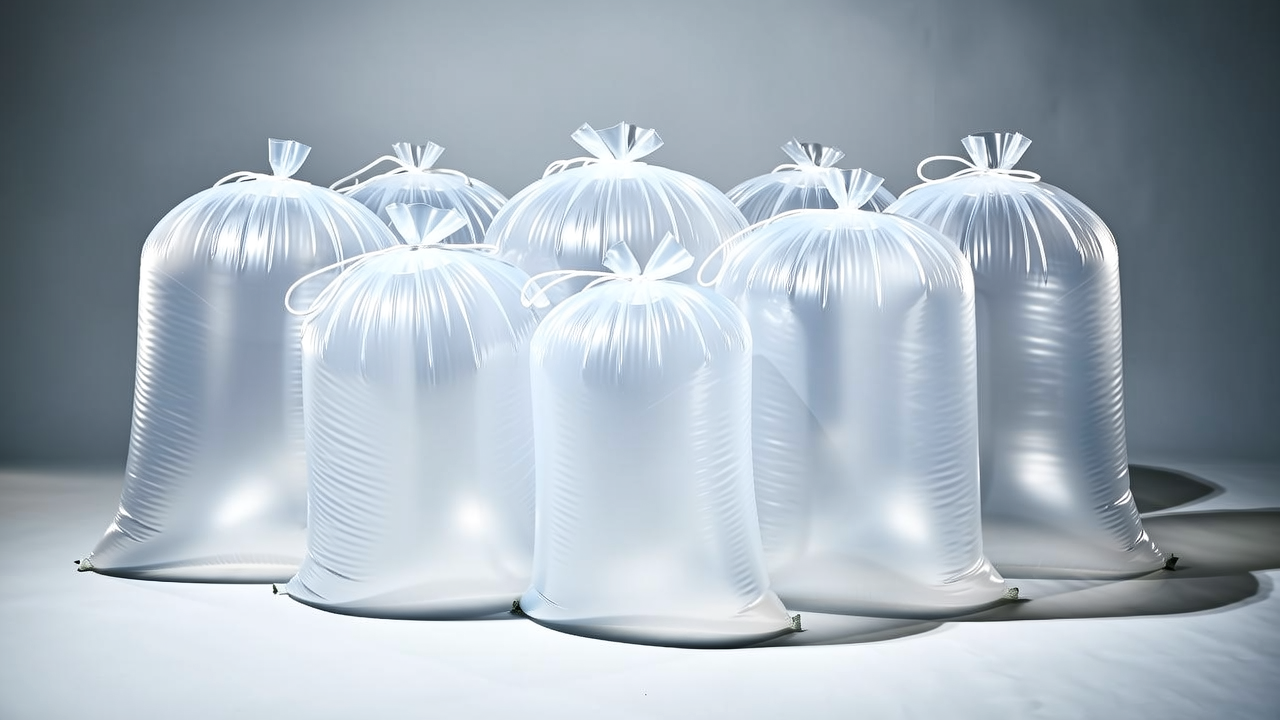
Air column bags appear more and more frequently in cross-border e-commerce and industrial logistics: they provide cushioning through rows of inflated columns, gradually replacing traditional foam and EPE pearl cotton. For products that are shock-sensitive, pressure-sensitive, and high in unit value, air column bags are often the most cost-effective line of defense. This article lays out the selection logic for air column bags—from inflation principle, specification parameters, and cost structure to use cases.
What Is an Air Column Bag: How Inflatable Cushioning Works
Also called a buffer air column bag or inflatable bag, it is usually made of multi-layer co-extruded PA and PE film. Uninflated, it is just a thin roll of film; once inflated, each column bulges independently, forming a cushioning wall. Two points are key: first, each air column is relatively independent—if one is punctured, the others still hold the structure; second, the film itself is resilient and absorbs and disperses energy on impact instead of passing the shock straight to the product.
Compared with bubble film, the air column bag cushions in a more three-dimensional way, suited to wrapping regular or semi-regular items; compared with molded EPE pearl cotton, it needs no tooling, and the empty roll takes far less inventory space. This is why air column bags have rapidly spread in small- and medium-batch packaging over the past two years.
Common Specs and Selection Parameters of Air Column Bags
Four parameters matter most in selection: column width, column height, total length, and film thickness. Column width decides a single column’s load capacity, with common specs from 5 cm to 10 cm; column height decides the wrap thickness, generally 5 cm to 12 cm; total length must cover the product’s longest side plus allowance for the end folds, usually about 1.2× the product dimension, leaving enough cushioning space.
Film thickness and material structure directly affect pressure resistance and air-retention time. For long warehouse storage without leakage, choose a PA/PE structure rather than pure PE; for short same-city transport, pure PE is lower cost. For the differences in film material structures, judge against the notes in the Packaging Film Classification Guide.
Cost Comparison: Air Column Bags vs. Traditional Cushioning Materials
On purchase unit price alone, air column bags are often more expensive than bubble film; but factoring in volume, labor, and damage rate, the conclusion often reverses. Uninflated, an air column bag is a very thin roll, so one truck can carry several times the quantity of molded foam, cutting storage and freight costs noticeably; inflation is done on site and takes no warehouse space. The hidden cost saved by lower damage rates is often several times the unit-price difference.
If you are still hesitating among several protective packaging options, see the Functional Packaging Selection Approach: first rank by product weight and drop risk, then compare material cost, and the decision becomes much clearer.
Which Products Suit Air Column Bags
The first group is electronics—laptops, monitors, routers, and server accessories—products that fear shock and static; wrapped in air column bags with an anti-static inner bag, protection is very stable. The second is alcohol and glass-bottled liquid food, where the columnar structure effectively prevents bottles from colliding. The third is precision instruments and some medical devices.
The fourth is large items in cross-border e-commerce. Such orders have high per-unit value and high return costs, and air column bags clearly lower transport damage rates. For the inner-packaging material choice of these product types, you can first review our Rollstock Packaging Material Notes, planning inner packaging and outer box specs together to avoid sizes compromising each other.
Common Issues When Using Air Column Bags
First, under-inflation leaves columns soft and collapses the cushioning effect—recommended to run a drop test by product weight first, then set the inflation volume. Second, the air column bag touching sharp edges directly is easily punctured, so pre-pack with EPE or corner protectors first. Third, storage at too high a temperature softens the film and speeds leakage; storing in a cool, room-temperature place is safer.
One more easily overlooked point: the air column bag’s seal position must avoid the product’s hard edges, and the closing method must be consistent—otherwise the same batch’s protection varies, and rework cost exceeds the material cost.
Summary and Recommendations
An air column bag is not a universal answer for all products, but for shock- and pressure-sensitive goods of high unit value, it strikes a good balance between cushioning effect and logistics cost. In selection, first set the product weight and drop height, then back-calculate column width, column height, and film thickness, and finally validate with a real drop test. For air column bags or other flexible packaging solutions, contact HASUPACK; we can produce samples to your product dimensions.
If you care more about consumer-facing retail packaging design and pouch-format selection, visit the OMOPACK website for more ideas.





