





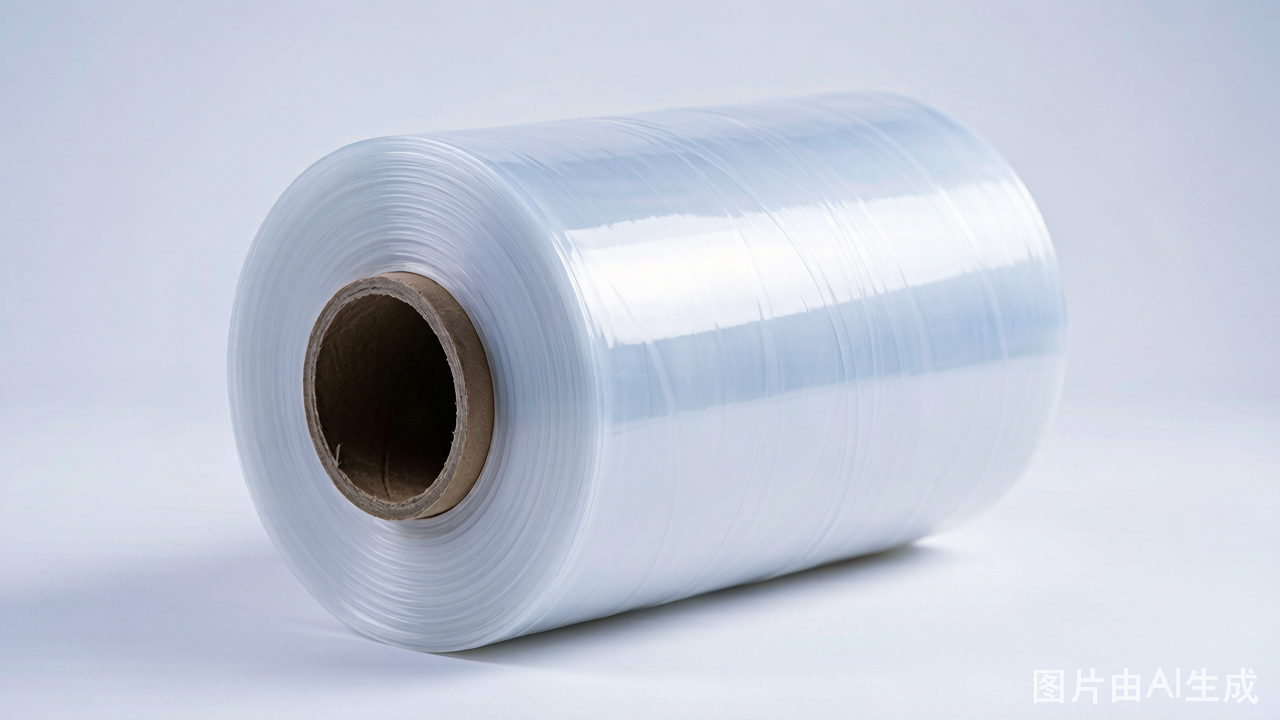
For food manufacturers, choosing a reliable food-grade rollstock film supplier is more than simple price comparison. Rollstock film is in direct contact with food, and its material safety, hygiene indicators, and physical performance are directly tied to product quality and consumer health. With the formal implementation of the GB 4806.7-2023 national food-safety standard, compliance requirements for plastic food-contact materials and articles have become stricter. This article provides procurement decision-makers with a systematic supplier evaluation framework across four dimensions: material certification, production process, testing capability, and supply-chain stability.
Material Compliance Basics for Food-Grade Rollstock Film
The core requirement of food-grade rollstock film is to ensure no harmful-substance migration occurs during food contact. Mainstream food-grade rollstock substrates include LDPE (low-density polyethylene), LLDPE (linear low-density polyethylene), and CPP (cast polypropylene), each suited to different scenarios. LDPE has good flexibility and is commonly used for frozen-food packaging; LLDPE has strong puncture resistance and suits bone-in meat packaging; CPP has high transparency and heat resistance and is widely used as the inner layer of retort pouches.
Notably, a food-grade rollstock film supplier must provide complete migration test reports. Under the GB 4806.7 standard, the total migration limit is 10 mg/dm², and specific migration-limited substances such as heavy metals (lead, cadmium, mercury, etc.) must meet stricter individual indicators. In addition, sensory requirements cannot be ignored—the film should not release off-odors into the food or cause color changes. Excellent suppliers typically commission third-party testing agencies such as SGS and Intertek to issue annual type-inspection reports.
Food-Safety Considerations for Multilayer Laminates
Modern food packaging widely uses multilayer laminate structures to achieve multiple functions such as oxygen barrier, moisture barrier, and light blocking. However, adhesives and ink layers in the lamination process can become potential migration risk sources if poorly designed. Under the GB 9685 standard, additives used in food-contact materials (including functional auxiliaries in adhesives) must be listed on the positive list before use. When evaluating suppliers, companies should pay particular attention to whether the lamination process uses safer options such as solvent-free lamination or water-based adhesives, and whether the ink uses reverse printing to ensure it does not directly contact the food.
Production Process Capability: Precision Control from Blown Film to Slitting
The production process chain for food-grade rollstock film is long with many control points; differences in a supplier’s technical capability are directly reflected in the consistency and reliability of the final product.
Blown-film process is the core step of rollstock production. Bubble stability, cooling uniformity, and take-up speed matching determine the film’s thickness tolerance. Quality suppliers typically control thickness tolerance within ±5%, with some high-end lines reaching ±3%. Uneven thickness not only affects packaging-machine efficiency but can also create local weak points that cause breakage. In addition, the uniformity of corona treatment determines subsequent print adhesion; food-grade rollstock generally requires a corona value of ≥38 dyne/cm.
Printing stage: food packaging demands stricter ink requirements. Food-packaging-specific inks compliant with GB 9685 must be used, and the printed surface should be designed on the outer or middle layer. Whether the supplier has benzene-free and ketone-free ink printing capability is an important indicator of its food-safety awareness. At the same time, printing registration accuracy should be ≤0.2 mm to ensure brand-image consistency.
Slitting and pouch making: the flatness of slit edges and the stability of pouch heat-seal strength are details that measure a supplier’s quality-control level. Heat-seal strength generally requires ≥30 N/15mm, with heat-seal width tolerance controlled within ±1 mm.
Supply-Chain Stability and Responsiveness
The nature of the food industry dictates that packaging-material supply must be stable and timely. Seasonal demand fluctuations (e.g., mooncakes, holiday gift boxes) and new-product launch windows all require suppliers to have flexible capacity and rapid response capability. Supply-chain stability can be evaluated from the following aspects:
Raw-material reserves: Quality suppliers typically maintain 2–4 weeks of raw-material safety stock, especially for imported specialty materials (such as food-grade resins from Dow and ExxonMobil), to cope with international logistics uncertainty. It is recommended to directly inspect their raw-material warehouse and purchasing records during evaluation.
Equipment redundancy: Suppliers with a single production line carry higher risk. An ideal supplier should have multiple blown-film and printing lines, ensuring delivery even during equipment maintenance or failure.
Minimum order quantity (MOQ): food-grade rollstock film suppliers differ markedly in MOQ by scale. Large suppliers’ MOQ can be as high as 5 tons per specification, while mid-sized suppliers can accept 1–2 ton orders. For small and medium food brands, finding a supplier with flexible MOQ willing to support small-batch trial production is especially critical.
Key Inspection Items for On-Site Audits
Documentary qualification review is only the first step; an on-site factory audit is what truly determines whether a supplier’s food-safety management system is implemented. The following are key items to focus on during an audit:
Workshop cleanliness: The production area for food-grade rollstock film should be physically isolated from industrial-grade product areas. The blown-film workshop should maintain positive-pressure ventilation to prevent external dust ingress. Floors and walls should be smooth and easy to clean, with no dead corners for dust accumulation. Where conditions allow, suppliers should install air showers and changing areas.
Pest control: Whether facilities such as insect-proof curtains, fly killers, and glue traps at workshop entrances are complete and regularly maintained is the most direct indicator of a factory’s basic management level.
Foreign-object control: Whether metal detectors or X-ray inspection equipment are running online, whether magnetic filters are cleaned regularly, and whether a broken-needle management system is implemented—these details directly determine the risk of foreign objects mixing into the final product.
Traceability system: Full-chain traceability from raw-material batch to finished-roll number is a core requirement of food-safety management systems (such as ISO 22000 and FSSC 22000). Once a quality problem occurs, the supplier should be able to lock down the affected batch and initiate a recall procedure within 2 hours.
Conclusion: Supplier Selection Is a Long-Term Investment
Choosing a food-grade rollstock film supplier should not be a one-time price-comparison decision, but should be treated as part of supply-chain strategy. A supplier with complete compliance qualifications, stable production processes, flexible supply capability, and a continuous-improvement culture can create long-term value for food companies across multiple dimensions—product iteration, cost optimization, and risk control. It is recommended that companies broadly collect supplier information in the initial screening stage, establish a qualified-supplier list of 2–3 after on-site visits, and achieve dynamic management through annual audits and performance scoring.
As a professional supplier deep in the plastic flexible-packaging field, HASUPACK operates food-grade blown-film lines, a full-process quality-testing system, and a complete compliance-documentation system. To obtain food-grade rollstock film samples or conduct a supplier audit, please contact us to reach our professional team.
For more packaging knowledge, visit the OMOPACK knowledge base.





