





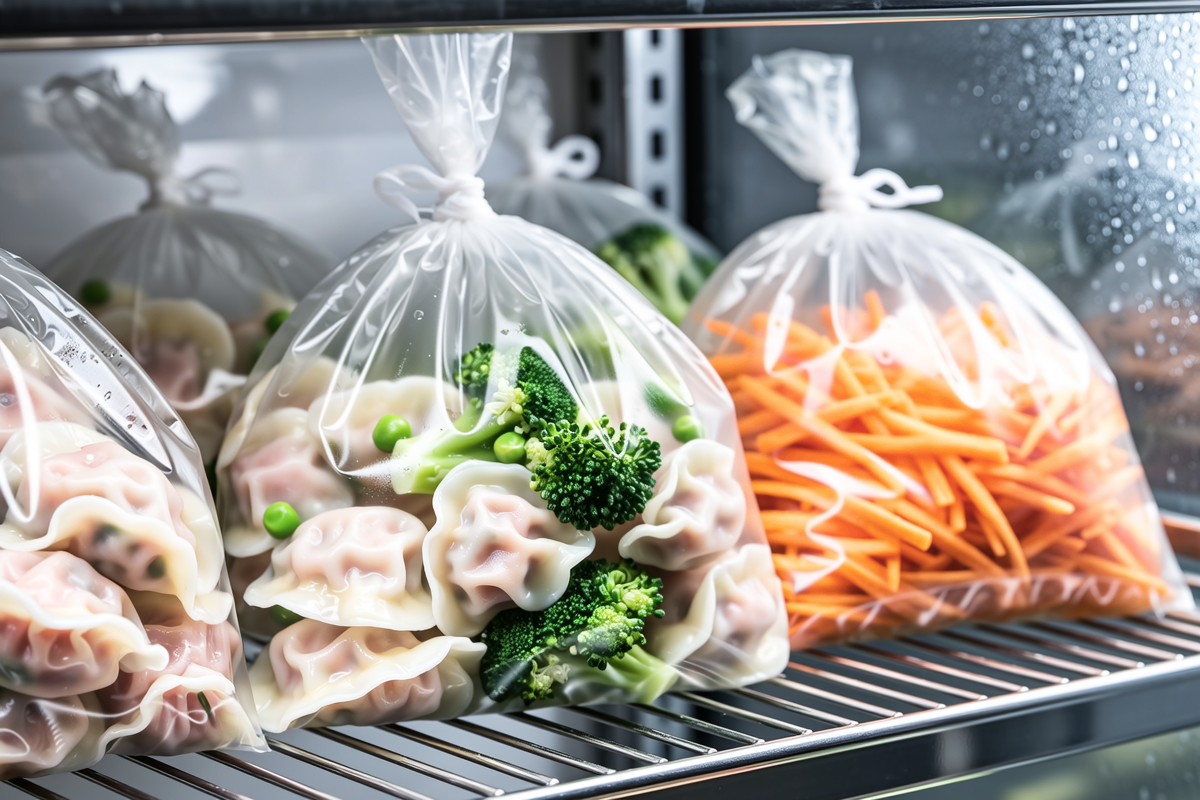
The low-temperature frozen packaging bag is an indispensable protective suit in the distribution of frozen food. Quick-frozen dumplings, frozen seafood, ice cream, prepared meals, these products leave the factory cold store, pass through cold-chain transport and supermarket freezers, and finally reach the home refrigerator, relying on a reliable low-temperature frozen packaging bag throughout. Wrong packaging means, at best, product dehydration and water loss with degraded taste, and at worst, freezer burn and spoilage, or bag rupture and juice leakage causing total-batch loss. This article explains low-temperature frozen packaging bags thoroughly from four angles: material, structure, pouch format, and customization.
Why Frozen Food Needs Dedicated Low-Temperature Frozen Packaging Bags
Many people think any bag that holds things can hold frozen food, which is a common misconception. Ordinary packaging bags perform acceptably at room temperature, but once in a -18℃ or lower cold-store environment, problems erupt. First is low-temperature embrittlement: most ordinary plastic films harden and become brittle at low temperature, with markedly lower impact strength, and a slight knock during handling can rupture them. Second is dehydration and freezer burn: the frozen environment is low in humidity, and moisture inside the bag slowly escapes through the film, the product surface gradually loses water and turns white, the so-called freezer burn, severely damaging the color and taste of meat. Third is odor transfer and oxidation: a freezer often stores many ingredients together, and a bag with insufficient barrier cannot block odor permeation, so seafood smell may transfer onto ice cream. Therefore, a low-temperature frozen packaging bag must simultaneously meet low-temperature resistance, puncture resistance, high barrier, and good seal integrity, this is its most essential difference from ordinary packaging.
How to Choose the Material for Low-Temperature Frozen Packaging Bags
Material selection for low-temperature frozen packaging bags is essentially balancing low-temperature performance against barrier needs. Polyethylene (PE) is among the most low-temperature-resistant general-purpose materials; LDPE and LLDPE retain good flexibility from -18℃ to -40℃, so the inner layer (sealant layer) of frozen food bags almost always uses PE. If the product needs stronger barrier, such as meat and seafood that prevent oxidation and odor transfer, then add a nylon (PA) or aluminum foil layer to the structure: PA offers both puncture resistance and low-temperature resistance, suiting bone-in or shell-on frozen products; aluminum foil or metallized layers greatly reduce oxygen and water-vapor transmission rates, extending frozen shelf life. Common frozen food packaging structures include PA/PE, PET/PE, and PET/AL/PE; which to choose depends on product form, freezing temperature, and expected storage time.
Common Low-Temperature Frozen Pouch Formats and Structure Design
After fixing the material, choose a suitable pouch format and structure. Frozen dumplings and glutinous rice balls mostly use three-side seal or center-seal pouches, flat packaging and controllable cost, suiting high-speed automatic packaging lines; frozen seafood, steak, and other large pieces suit pouch formats with stand-up function, convenient for upright display and secondary resealing by consumers; frozen prepared pouches with soup need flat bags or gusset pouches with outstanding puncture resistance, and reserve sufficient heat-seal edge width. On structure design, several details deserve attention: first, seal strength, frozen products face compression and drop impact in transport, and insufficient heat-seal strength easily cracks at the seal; second, easy-tear design, consumers’ finger dexterity drops in low-temperature environments, and a reasonable tear notch clearly improves the experience; third, printing ink, the inner layer in direct food contact must never be printed, and outer-layer ink must also meet food-packaging safety standards.
Low-Temperature Frozen Packaging Customization: Four Parameters You Must Confirm
When enterprises customize low-temperature frozen packaging bags, the most common mistake is reporting only size and quantity while ignoring key usage parameters. The first to confirm is the freezing temperature: ordinary freezing (-18℃) and deep freezing (below -40℃) have completely different requirements for film formulation; the lower the temperature, the higher the demands on low-temperature additives and material selection. The second is storage period: short-turnover products can use ordinary PE structures, while meat and seafood needing long-term frozen storage should choose high-barrier structures containing PA or aluminum foil. The third is the packaging method: manual bagging, semi-automatic sealing, and fully automatic high-speed lines differ greatly in their requirements for pouch tolerance, seal temperature, and openability. The fourth is the transport environment: stacking pressure in long-haul cold-chain transport and impact during forklift transfer should be verified through low-temperature drop tests at the sampling stage. Confirming these four parameters before sampling avoids the vast majority of post-mass-production quality problems.
Conclusion: Entrust Low-Temperature Frozen Packaging Bags to a Professional Factory
A low-temperature frozen packaging bag looks like just a bag, but actually it is a systems engineering involving polymer materials, lamination, printing ink, and pouch-making technology. Wrong material selection or cut-corner structure often only surfaces when the consumer defrosts the product, by which time the loss has already occurred. For products needing frozen packaging, we recommend prioritizing a factory with frozen-food packaging experience, and completing low-temperature drop, seal-integrity, and barrier tests before mass production. On the relationship between moisture protection and freshness, refer to our earlier moisture-proof packaging materials guide; to further understand differences among pouch formats, also read this analysis of stand-up vs. regular bags.
HASUPACK has deep experience in the flexible packaging industry and provides one-stop service from low-temperature frozen packaging bag structure design, sampling, to full production run, with all materials complying with food-contact material safety standards. If you are looking for a reliable packaging solution for frozen food, please contact HASUPACK for free sampling and selection advice, or visit our sister brand OMOPACK for more cross-border food packaging solutions.





