





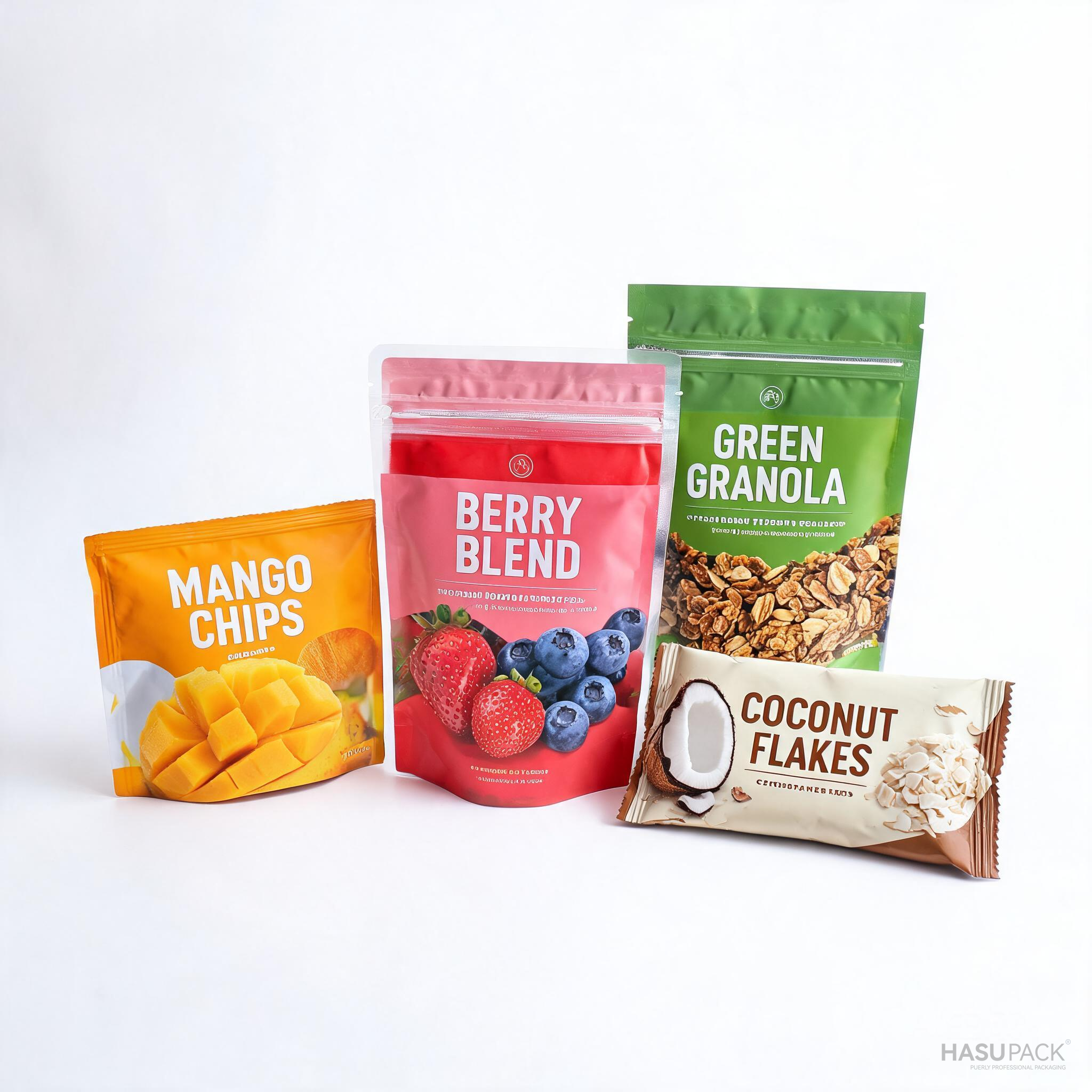
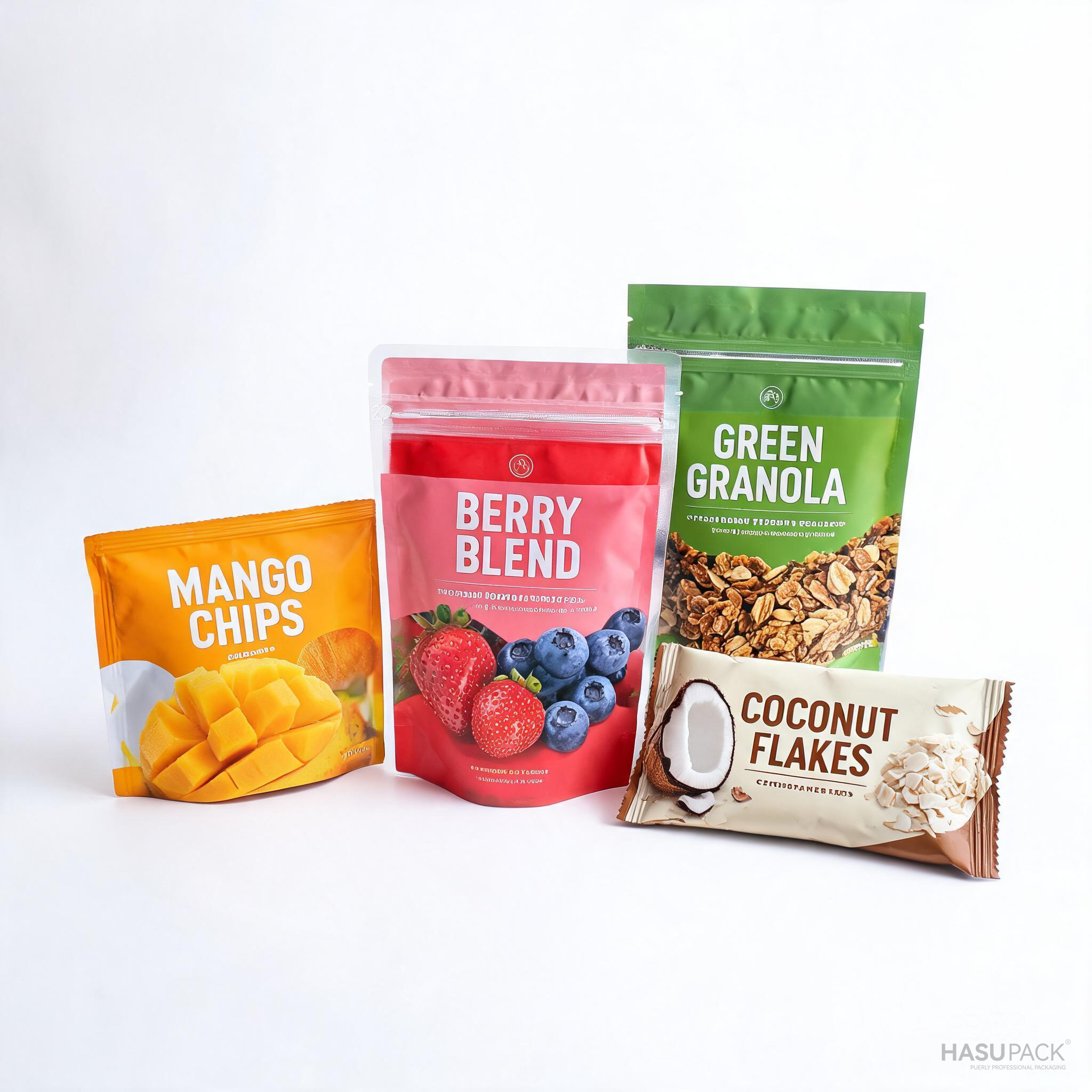
Many customers ask when ordering custom packaging for the first time: What costs are included in custom packaging? The quote shows a single total, yet why does the final spend often run far above expectations? As a flexible-packaging factory that has served thousands of orders, we want to tell you: the number on the quote is only the tip of the iceberg. What truly determines the procurement budget is the hidden cost buried behind the quote. From an inside-the-factory perspective, this article breaks down item by item what custom packaging costs include, helping you settle the account clearly.
Visible Costs: Four Basic Items on the Quotation
To understand what custom packaging costs include, start with the four basic items on the quotation. First is the material cost, the largest share at roughly 50%–70% of the quote. Take a food packaging pouch as an example: the grade and thickness of raw materials such as PE, PP, PET, aluminum foil, and nylon directly determine material cost—an aluminum-foil laminate structure costs more than double a plain PE single layer. Second is the printing cost; gravure printing requires cylinder engraving, and a six-color gravure cylinder set typically costs several thousand to tens of thousands of yuan, while the printing process itself adds ink, power, and labor costs. Third is the pouch-making cost; different pouch formats such as three-side seal, stand-up, and flat-bottom vary in difficulty, with clear differences in machine hours and labor. Fourth is the auxiliary-parts cost; components like resealable zippers, spouts, degassing valves, and tear notches are each priced separately.
These four items are costs any reputable factory will clearly list on the quotation, and customers can usually understand them. But if you think custom packaging costs include only these, you are badly mistaken. What really blows the budget is usually the six categories of hidden cost below. For a detailed reading of the quotation, see our earlier article, What Costs Are Included in a Packaging-Bag Quotation.
Invisible Costs: A Checklist of Six Hidden-Cost Categories
The first category is the sampling fee. Many factories roll the sampling fee into the full production order, but if you only sample without placing an order, the sample and courier fees are borne by the customer. Some customers revise artwork repeatedly, and a single sampling cycle can take a week—the time cost is often overlooked. The second category is the plate/cylinder cost. Gravure cylinders and flexographic plates are one-time investments; although a full production order can amortize them, if the order volume falls short of the agreed quantity, the plate cost must be paid in full. The third category is MOQ amortization cost. The higher the MOQ, the lower the fixed cost per unit; conversely, a small-batch order can cost more than 30% above a large-batch unit price. For the ins and outs of MOQ, see our analysis, Why Custom Pouch MOQs Are So High.
The fourth category is the design-revision cost. Changing color, size, or material after the artwork is finalized means the factory must re-output films and re-make plates—a cost customers often overlook. The fifth category is warehousing and logistics cost. Packaging materials are bulky and light, so volume-based freight is common; if an order is delivered in batches, each shipment’s transport cost stacks up. The sixth category is quality-risk cost, the most easily underestimated: once a full production run shows defects such as color deviation, leakage, or poor sealing, the losses from returns, rework, and delayed delivery often far exceed the small purchase-price saving originally gained.
How to Avoid Hidden Costs: Three Things to Do Before Procurement
Since what custom packaging costs include is more complex than imagined, how can buyers keep the budget reasonable? First, state all requirements clearly before quoting. Product contents, pack size, material structure, print colors, pouch format, quantity, and lead time—the more complete this information, the more accurate the factory quote and the fewer later changes. Second, proactively ask about one-time fees. Before ordering, clarify the ownership and amortization rules for sampling, plate, and revision fees, and write them into the procurement contract to avoid disputes later. Third, put quality requirements into the acceptance criteria. Color-deviation range, seal strength, and print registration accuracy all need clear metrics; inspect against the standard on arrival to keep quality risk out before stock enters the warehouse.
Summary and Recommendations
What custom packaging costs include ultimately comes down to a combined equation of “visible cost plus hidden cost.” Visible costs can be compared across suppliers, while hidden costs are avoided through experience and knowledge of the factory. Choosing a factory with transparent processes, clear quotations, and the courage to put fee rules in writing matters more than simply driving down the unit price. If you are planning packaging procurement, bring your requirements and talk to us—we will lay out every cost item for you.
Need custom packaging? Contact HASUPACK for a detailed quotation. For more flexible packaging solutions, you can also visit OMOPACK.





