





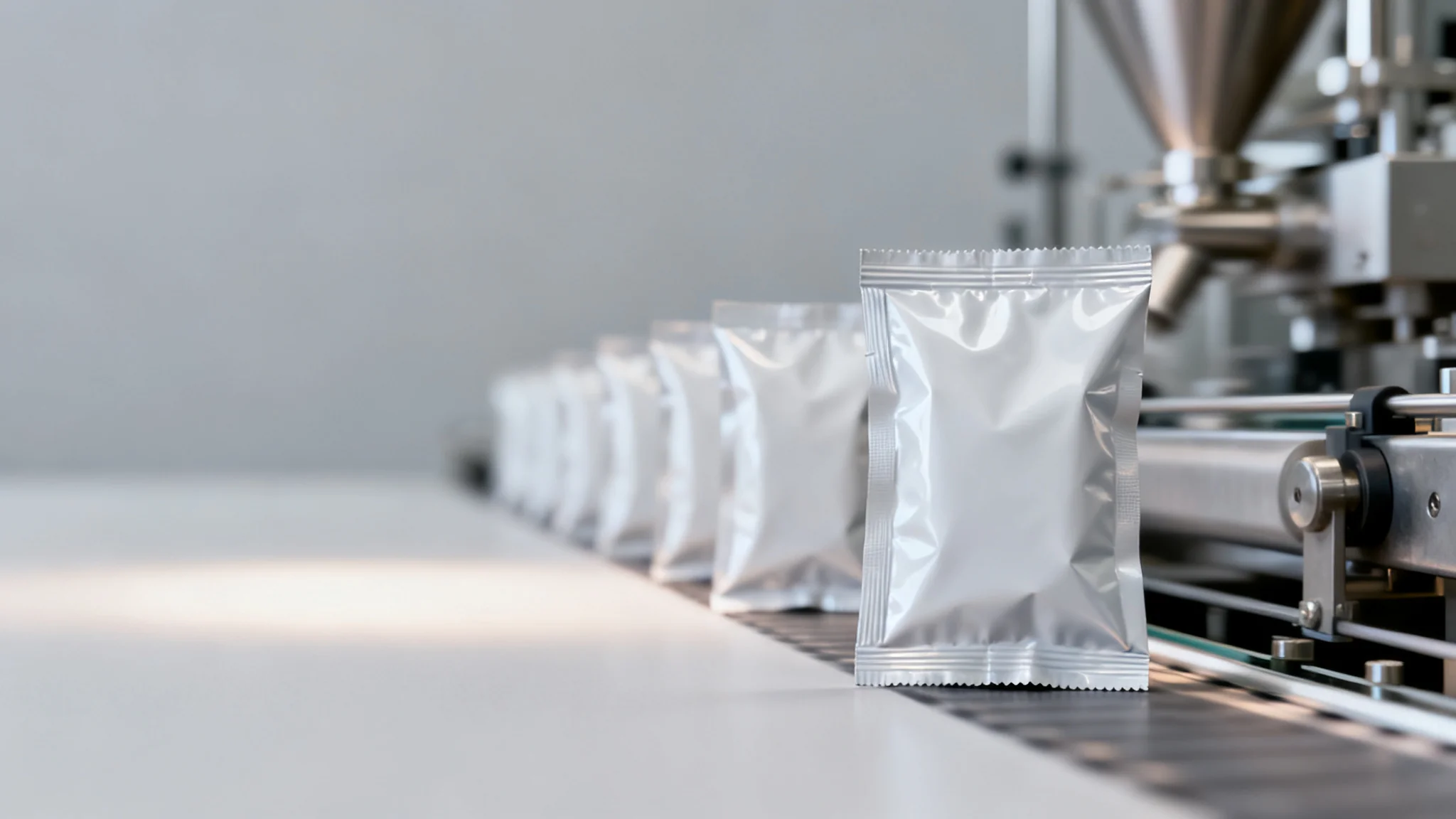
Shampoo sachet packaging is a three-layer film pack filled with 5 to 20 ml of liquid product and sealed on all four sides or along a centre fin. The format looks simple, but the tolerances are not: a 2 ml fill error is 20% of a 10 ml sachet, and one product smear in the seal area becomes a leak on the retail shelf. This guide covers film structure, fill volume control, seal strength, tear notch placement and the differences between hotel, travel retail and multipack work.
What Film Structure Suits a Liquid Shampoo Sachet?
A basic sachet uses a 12 micron polyester outer layer for print and stiffness, a white or metallised middle layer, and a 60 to 100 micron sealant such as linear low-density polyethylene. The outer layer carries the artwork and resists scuffing; the sealant has to tolerate the surfactant system. For a strongly fragranced shampoo, a foil or EVOH barrier layer reduces aroma loss and stops migrated oil from dulling the print. Where the fragrance load is high, we run a compatibility check: fill a sample, hold it at 40°C for two weeks, then inspect the sealant for swelling, delamination or colour transfer. Film choice is confirmed by that test. The cosmetic and personal care packaging solutions page lists the standard laminates used on this format.
Fill Volume and Headspace at 5 to 20 ml
Small volumes amplify every error. A piston filler set to 10 ml that drifts by 1 ml changes the delivered dose by 10%, while the same drift on a 250 ml bottle is invisible. On a sachet line the nominal volume, allowed tolerance and headspace belong on one drawing, because a sachet filled to the seal edge leaves the product nowhere to go when the jaws close. Keep 4 to 8 mm of clear film above the liquid line so the seal forms on dry film. Net content rules in the destination market set the declared value, so confirm them before the artwork is finalised, as on the travel size shampoo sachet format.
How Strong Should the Seal Be?
Seal strength is a design target, not a maximum. A sachet has to survive the filling line, the carton, transport and a firm squeeze in the shower without opening, yet still tear cleanly at the notch. Peel strength is measured on a tensile tester following ASTM F88, and the failure mode is recorded beside the number, because a seal that peels cleanly differs from one that tears the film at the same load. Fin seals on a 70 micron PE sealant sit in a workable range when jaw temperature, pressure and dwell are held constant; change any one and the number moves.
Why Does Seal Contamination Matter on a Wet Line?
Liquid in the seal area is the most common cause of a leaking shampoo sachet. Product that reaches the jaw creates a channel that survives the seal cycle and only shows up as a slow leak a week later. Vertical form-fill-seal machines handle this with nozzle design, fill timing and a stripper that pushes the film wall away from the product stream before sealing. On a horizontal line, anti-drip nozzles and a short delay after fill do the same job. Weight checks catch the trend and ASTM D3078 bubble testing confirms it, but the fix is a dry seal area: adjust the fill profile so the product never touches the jaw.
Tear Notch and Opening Behaviour
A tear notch is a small mechanical or laser cut in the sachet edge. Position matters more than size: place the notch just below the top seal, on the side the thumb reaches first, and align it with the print so the tear runs across the sachet rather than down the side. A notch cut too deep starts a tear in transit; one that is too shallow forces the user to use teeth, and the sachet bursts. On 5 to 10 ml hotel sachets a shallow notch plus a 3 to 4 mm unsealed lip gives enough grip for wet hands.
Hotel, Travel Retail and Retail Multipack Differences
Use cases for a shampoo sachet fall into three groups, and the specification shifts with each. Hotel amenity sachets are single-use and often unprinted or one-colour, bought in large counts where line speed dominates. Travel retail sachets need full print, a barcode and a batch code area that survives a wet bathroom. Retail multipacks chain five to ten sachets with perforations, so the film has to tear at the perforation without opening the neighbour, and the print has to register across the strip. The boundary sits on the other side: a single sachet sold alone needs a hang hole or a display carton. The shampoo sample packaging bags range shows the sample-size layout.
What Should the Print and Registration Check Cover?
On a sachet of 60 by 80 mm, a 0.5 mm registration drift shows on a panel edge. Gravure gives the tightest registration on large solids; flexo needs more careful trap. Check the press proof at final size rather than on an A3 sheet, because type below 5 pt fills in and reverses below 6 pt disappear against a 70 micron sealant. Reserve a matt or lacquer-free window for the batch and expiry code, confirm the code stays legible after the sachet has been squeezed, and keep print out of the seal area where ink can reduce bond strength. The packaging process instructions page lists the standard proof requirements.
Conclusion
A shampoo sachet usually fails for boring reasons: product in the seal, a fill volume that leaves no headspace, or a notch that starts a tear in the wrong direction. Three checks cover most of the risk:
- Fill a sample at the production set point and confirm the headspace on the drawing.
- Pull seal strength with the failure mode recorded, not just the peak load.
- Open twenty finished sachets by hand and reject any that need teeth or burst at the notch.
When those three hold, film structure and print become commercial decisions rather than quality risks. Send the film structure, fill volume and target market with any enquiry, because each one moves the seal window.
Frequently Asked Questions
Does a shampoo sachet need a foil layer?
No, not always. A shampoo sachet packaging structure needs foil or EVOH only when fragrance is the main product claim, or when the destination market asks for a long ambient shelf life. A clear PET/PE laminate holds a mild shampoo through a short travel retail cycle, but fragrance oils migrate into the sealant over time and the pack can end up smelling of cardboard. The test is practical: store filled samples at 40°C for two to four weeks, then smell the sachet at arm’s length and check the seal for swelling or wrinkling.
What fill tolerance is realistic at 10 ml?
No single figure applies. The achievable tolerance depends on the filler type, product viscosity and line speed, so it has to come from a fill weight study at production speed rather than from a catalogue. A piston filler with a positive displacement pump is generally the most repeatable option for a low-viscosity shampoo, while a time-pressure system drifts as viscosity changes with temperature. Weigh ten consecutive sachets, then ten more an hour later; the spread between the runs tells you more than a single average.
Why do sachets leak at the seal corner?
Most corner leaks come from film folded unevenly into the jaw. At the corner the laminate turns through 90 degrees, so four layers meet instead of two, and a fold or wrinkle leaves a path that no amount of jaw pressure closes. Check the forming shoulder, the film tension and the position of the seal bars against the finished sachet outline. Trimming the corner seal radius or adding a small radius to the seal bar often removes the problem without changing the film.
Can a shampoo sachet run on a standard vertical form-fill-seal machine?
Yes, if the machine is set up for liquid filling rather than powder. That means a liquid dosing system, a nozzle that reaches below the intended fill line, a stripper to keep the film wall clear of the product, and seal jaws sized for the sachet width. The film also needs enough stiffness to track without curling. A trial on the actual machine, with the intended film and product, answers the question faster than a specification sheet.





