





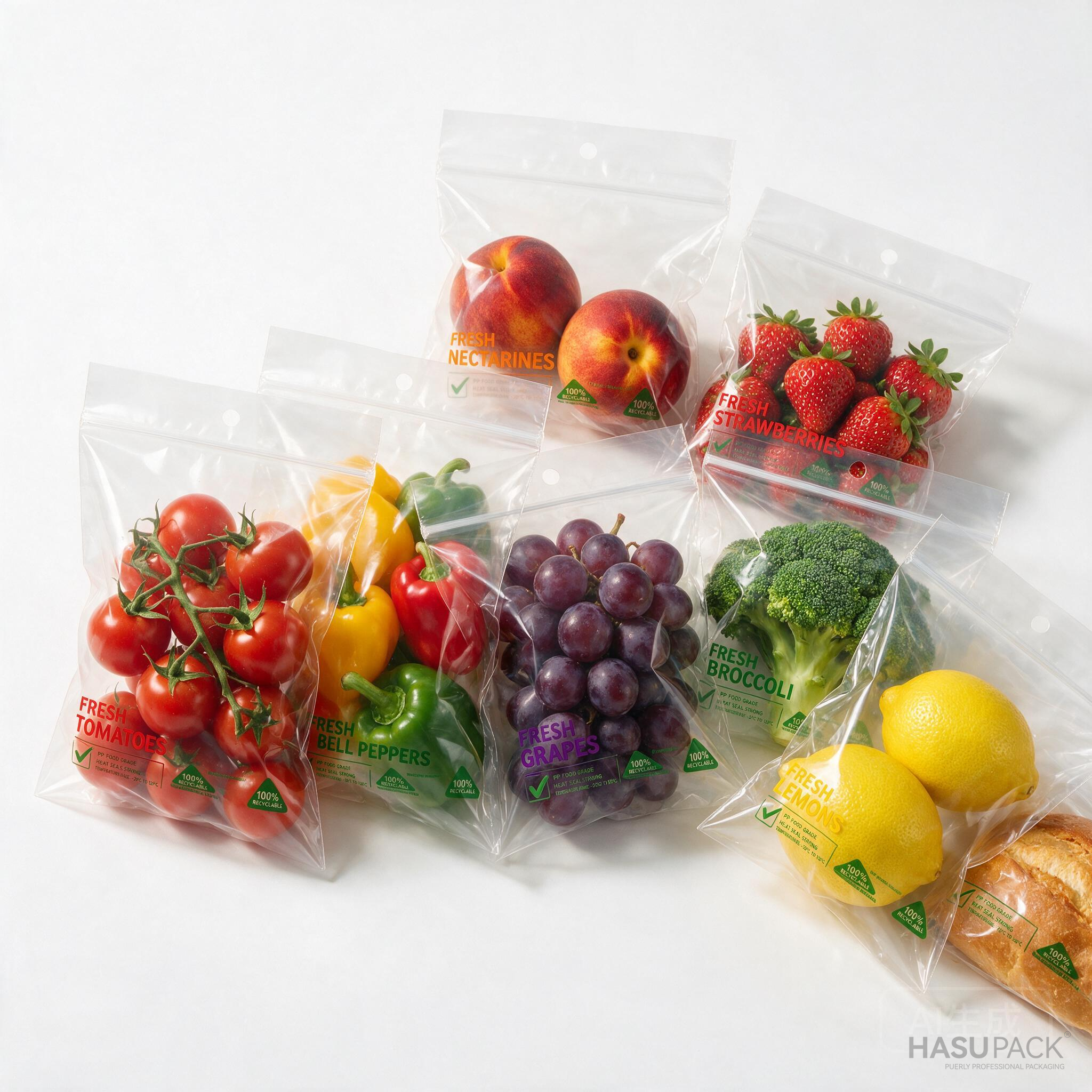
In the food industry, the safety of packaging bag materials is always a focus shared by brands and consumers alike. Faced with a dazzling array of packaging materials on the market—PE, PP, PET, PA, aluminum foil—which one is truly the safest? As a practitioner with years of experience in the flexible packaging industry, today I’ll skip the detours and say it straight: there is no absolutely “safest” material, only the safest solution suited to a specific food scenario.
I. The Underlying Logic of Food Packaging Safety: Migration
To judge whether a packaging material is safe, the core metric is migration—the amount of substances transferred from the material into the food. The national standard GB 4806 series clearly stipulates that the total migration of food contact materials must not exceed 10 mg/dm². Different materials show vastly different migration behavior due to differences in molecular structure and additive formulations.
For example, PE (polyethylene) has a simple structure and few additives, making it one of the most recognized safe food packaging materials, widely used for cling film, shopping bags, and inner seal layers. PP (polypropylene) has strong high-temperature resistance and suits microwave heating and retort scenarios. But note—a material being safe does not mean the finished product is safe; residual solvents in printing inks and adhesives are the real “hidden killers.”
II. Safety Comparison of Five Mainstream Food Packaging Materials
1. PE (Polyethylene)—The “Safety Backstop” for Everyday Packaging
PE is formed by polymerizing ethylene, with a stable molecular structure and no toxic monomers. Food-grade PE film has extremely low total migration, especially suitable for high-moisture foods. But PE is not high-temperature resistant and may deform above 80℃.
2. PP (Polypropylene)—A Safe Choice for High-Temperature Scenarios
PP has a melting point above 160℃ and can withstand 121℃ high-temperature retorting. Its chemical resistance is excellent, suitable for both acidic and alkaline foods. Note: CPP (cast polypropylene) is often used as the inner layer of laminated bags, with safety equivalent to PP.
3. PET (Polyethylene Terephthalate)—Balancing Clarity and Barrier
PET offers excellent clarity and gas barrier properties, making it the main outer-layer material for beverage bottles and food packaging bags. Food-grade PET contains no harmful plasticizers, but may release acetaldehyde at high temperatures (above 70℃), so it is not recommended for direct containment of hot liquids.
4. PA (Polyamide/Nylon)—The “Invisible Guardian” Against Punctures
PA is known for its excellent puncture resistance and heat resistance, often used in vacuum pouches and high-temperature retort pouches. But PA itself is highly hygroscopic and usually needs to be laminated with PE or PP.
5. Aluminum Foil (AL)—The King of Barrier Performance
Aluminum foil can almost completely block oxygen, light, and moisture, making it the first choice for coffee, tea, milk powder, and other products with very high freshness requirements. But aluminum foil does not seal on its own and must be laminated with a heat-seal layer; once the foil layer has pinholes, barrier performance drops sharply.
III. Key Factors Affecting Safety: It’s Not Just About Choosing the Right Material
3.1 Additives and Auxiliaries
Plastic raw materials require additives such as antioxidants, light stabilizers, and slip agents during processing. The migration risk of these auxiliaries is the focus of safety assessment. Reputable factories strictly select food-grade additives and control the addition amount.
3.2 Printing Inks
Residual benzene- and ketone-type solvents in solvent-based inks are a major food safety hazard. It is recommended to choose benzene-free, ketone-free inks or water-based inks, and allow sufficient solvent evaporation time after printing.
3.3 Lamination Adhesives
Polyurethane adhesives used in solvent-free lamination are extremely safe after full curing. Solvent-based lamination, however, requires strict control of residual solvent concentration.
IV. Factory Practice: How to Ensure Packaging Safety?
As a factory with over ten years of food packaging production experience, HASUPACK controls safety from three dimensions:
- Raw materials: All purchased food-grade raw materials comply with GB 4806 and FDA standards, with test reports requested for each batch.
- Production process: Class 100,000 cleanroom, controlled temperature and humidity, with full online monitoring of residual solvents.
- Finished product testing: Migration tests, residual solvent tests, and seal strength tests for each batch, with traceable data.
Food packaging safety is not achieved by a single material, but by a full-chain guarantee from raw material selection, process control, to quality testing. When customizing packaging, brands should look not only at what material is used, but at whether the factory has a complete quality control system.
V. Practical Advice for Buyers
If you are looking for a food packaging supplier, we recommend focusing on the following:
- Food Production License (QS/SC)—the most basic threshold.
- Whether food-grade raw materials are used—request to see the FDA or national standard test reports for the materials.
- Whether the printing process is eco-friendly—we recommend solvent-free lamination and benzene-free, ketone-free printing.
- Whether third-party test reports are provided—reports from authoritative bodies such as SGS and Centertest are more convincing.
Overall, PE and PP are the safest and most widely used basic materials, while aluminum foil and PA are indispensable in specific high-end scenarios. The key is not “choosing the most expensive,” but “choosing the right one”—the best solution matched to product characteristics and usage scenario.
Want to learn more about food packaging material safety? Contact HASUPACK, and our technical team will provide professional material selection advice.





