





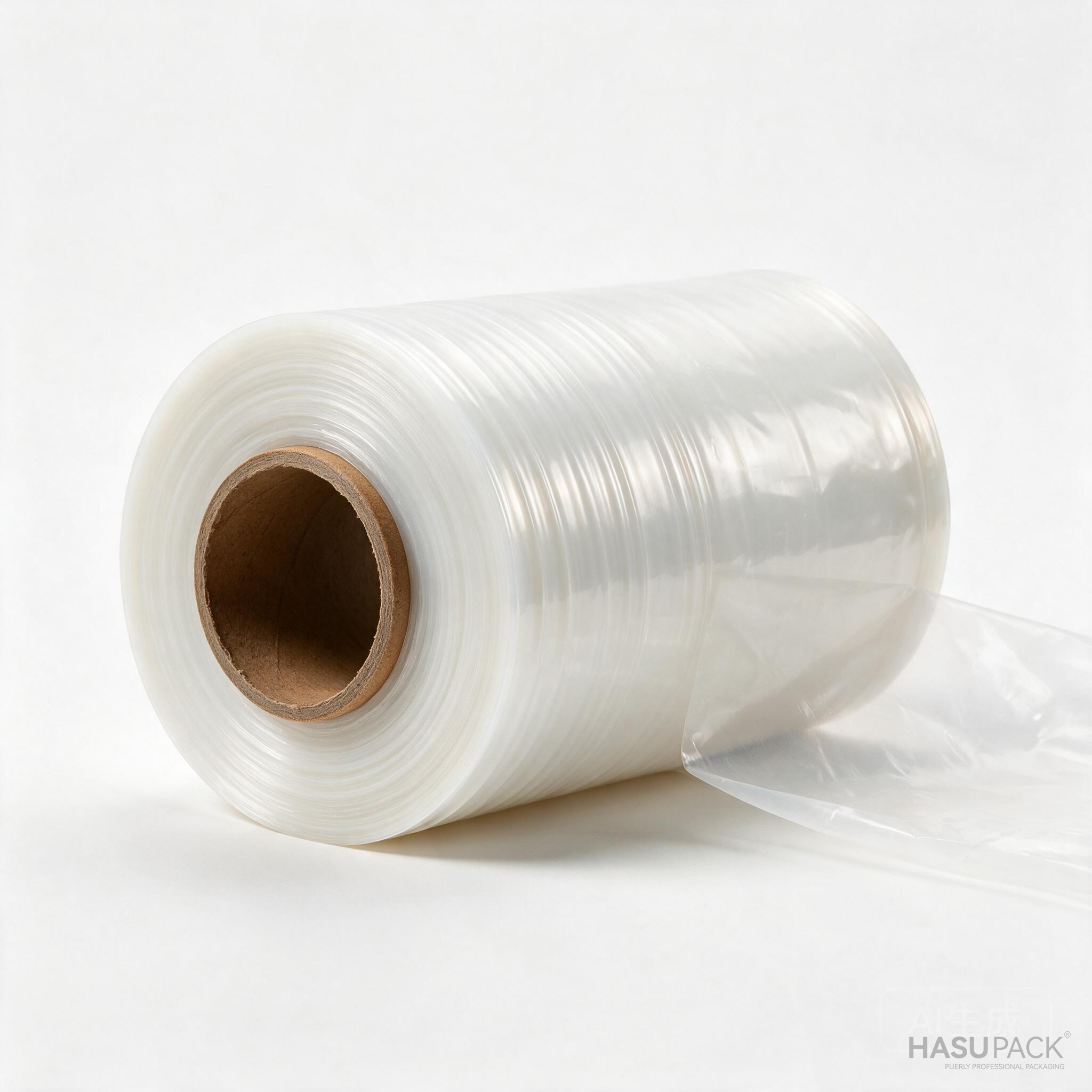
PE bags are among the most widely used plastic packaging bags in the food packaging industry. The full name of a PE bag is polyethylene bag; with its excellent chemical stability, good heat-sealing performance, and relatively low cost, it has become the preferred packaging solution for the food, daily-chemical, and industrial sectors. Understanding the properties and application scenarios of PE bags is essential for packaging buyers and brand owners.
The Core Material of PE Bags: What Is Polyethylene
Polyethylene (PE) is a thermoplastic resin polymerized from ethylene monomers. Based on molecular structure and density, polyethylene is divided into three main types: high-density polyethylene (HDPE), low-density polyethylene (LDPE), and linear low-density polyethylene (LLDPE). HDPE has a denser molecular arrangement and higher rigidity and strength, commonly used for shampoo bottles and milk jugs. LDPE has more branched molecular chains and better flexibility, making it the primary raw material for PE bags. LLDPE combines strength and flexibility and is an ideal material for stretch film. Each PE material has its own unique application scenarios in food packaging.
Key Differences Between HDPE, LDPE, and LLDPE
HDPE has a density between 0.941–0.965 g/cm³, with high crystallinity and melting point; the resulting bags have high stiffness but feel relatively hard. LDPE has a density of 0.910–0.925 g/cm³, with a soft texture and good transparency, making it the mainstream material for supermarket shopping bags and food preservation bags. LLDPE has a density close to LDPE, but its molecular structure is more regular, offering better tensile strength and puncture resistance, and is often used as the heat-seal layer in laminated films. In the actual production at HASUPACK, these PE materials are often blended according to product requirements to achieve optimal performance.
Main Applications of PE Bags in Food Packaging
PE bags are extremely widely used in the food packaging field. From the bread bags and vegetable preservation bags we see every day, to the inner packaging of frozen foods, and the heat-seal layer of snack composite packaging, PE material is everywhere. The reason PE bags have become the “all-rounder” of food packaging is mainly due to the following properties: first, non-toxic and odorless—food-grade certified PE material can directly contact food; second, good low-temperature performance, maintaining flexibility even at –40℃, suitable for frozen food packaging; third, excellent heat-sealing performance, enabling strong seals at lower temperatures and improving packaging efficiency.
Selection Recommendations for PE Bags Across Food Categories
Different food categories have different requirements for PE bags. Fresh vegetables require PE bags with breathability and anti-fog properties, needing a “breathing” function achieved through special formulations. Frozen meats require PE bags with good low-temperature impact resistance to prevent brittle cracking in the frozen state. Dry snacks place more emphasis on the moisture barrier and seal reliability of PE bags. For foods requiring high-temperature retort, a plain PE bag cannot meet the temperature-resistance requirement and must be laminated with PA (nylon) or PET materials. If you are selecting a suitable packaging solution for your product, you can refer to How to Choose Food Packaging Bags for more details.
Environmental Performance and Recyclability of PE Bags
The environmental performance of PE bags is better than many people realize. Pure PE bags are mono-material packaging with high recycling value in the recovery system. Unlike aluminum foil laminate bags or multi-layer heterogeneous laminated bags, all-PE structure bags can go directly into the plastic recycling stream. In recent years, the industry has been actively promoting “all-PE recyclable packaging” solutions, achieving mono-materialization through material modification technology while maintaining barrier performance. The carbon footprint of PE bags is also lower than many other packaging materials, with production energy consumption only about 1/5 that of aluminum foil.
The Proper Way to Recycle PE Bags
After consumers finish using PE bags, they should clean them and place them in the recyclable plastics category. In China, PE bags belong to plastic recycling categories #4 or #2, depending on the material type. Although the actual recycling rate of PE bags still has room for improvement, with the advancement of waste-sorting policies and recycling technology, the recycling rate of PE bags is increasing year by year. As a responsible packaging supplier, OMOPACK is also actively promoting recyclable mono-material packaging solutions.
How to Choose a Quality PE Bag Supplier
When choosing a PE bag supplier, evaluation should be made across the following dimensions: first, food-grade qualification certifications, including the QS production license and food-contact material compliance declaration; second, raw material source—whether imported or domestic raw materials are used directly affects product quality; third, the advancement of production equipment—highly automated lines ensure product consistency and stability; fourth, the quality control system, including incoming material inspection, in-process control, and finished product testing. HASUPACK operates multiple fully automated PE pouch-making lines, with quality controllable across the entire chain from raw material to finished product, meeting the customization needs of customers in different industries.
Although PE bags have a simple structure, different application scenarios have customized requirements for material formulation, thickness, size, and printing. If you are looking for a reliable PE bag supplier or want to learn more about packaging solutions, please contact us for professional advice. You can also visit OMOPACK’s website at omopack.com to explore a wider range of packaging products.





