





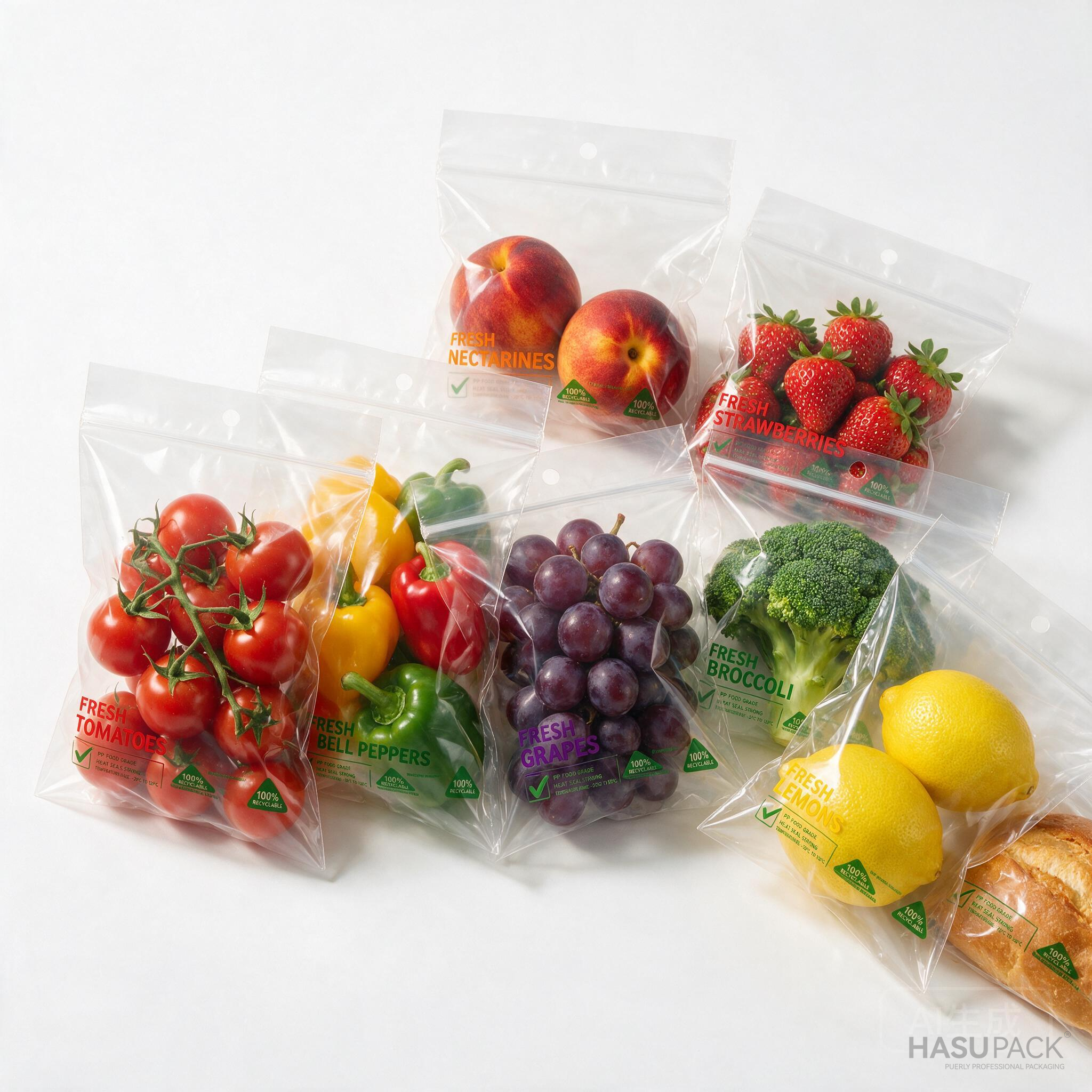
PP Plastic Bags Explained: Why They Are the All-Rounder of Food Packaging
PP plastic bags are the second most common general-purpose plastic packaging product in the food packaging field, after PE bags. Made from polypropylene, PP bags hold an irreplaceable position in microwaveable food, high-temperature retort food, and ready-to-eat product packaging thanks to their excellent high-temperature resistance, good transparency, and outstanding barrier properties. This article analyzes in depth the material properties, core advantages, and application scenarios of PP plastic bags.
The Core Material of PP Plastic Bags: Properties of Polypropylene
Polypropylene (PP) is a thermoplastic resin polymerized from propylene monomers. Based on molecular chain structure, PP is divided into two main categories: homopolymer polypropylene (PP-H) and copolymer polypropylene (PP-C). Homopolymer PP has good rigidity and high hardness, suitable for packaging containers requiring stiffness. Copolymer PP has higher impact strength and better low-temperature performance, making it more suitable for flexible packaging bags. The density of PP material is about 0.90–0.91 g/cm³, among the lightest of all common plastics, giving PP bags a significant cost advantage in transport and storage.
Core Differences Between PP and PE Bags
Although both PP and PE bags are polyolefin plastics, they differ significantly in performance. PP plastic bags can withstand temperatures above 121℃, suitable for microwave heating and high-temperature retort; whereas PE bags typically have a heat-resistance limit not exceeding 90℃. PP bags have better transparency and gloss than PE bags, with a superior shelf display effect. PP bags have higher rigidity and stiffness, holding their shape well, suitable for stand-up pouches and other formats requiring structural support. However, PP bags have poorer low-temperature performance than PE bags and become brittle below 0℃; therefore, in the material selection at HASUPACK, PE rather than PP is generally recommended for frozen food.
Main Applications of PP Plastic Bags in Food Packaging
The application scenarios of PP plastic bags are very broad. The most common include: microwaveable ready-to-eat rice and frozen food packaging, leveraging PP’s high-temperature resistance to achieve one-step “from freezer to microwave” heating; cup lids and straw packaging for milk tea and beverages, where PP’s transparency and rigidity ensure a good consumer experience; inner packaging bags for baked goods, where PP’s moisture barrier and oil resistance perfectly suit oily foods such as bread and cakes. In addition, PP material is widely used as the inner heat-seal layer of retort pouches, and when laminated with PA or PET can withstand 121℃ high-temperature sterilization processes.
Advantages of PP Plastic Bags in Hot-Food Packaging
Hot-food packaging is the area where PP plastic bags have the greatest advantage. Traditional PE bags soften and deform when in contact with hot food above 60℃, whereas PP bags easily withstand freshly cooked food temperatures. PP material also has better oil resistance than PE and will not swell or degrade from contact with oily foods. PP plastic bags also offer excellent water-vapor barrier performance, effectively maintaining the moisture and taste of hot food. For prepared meals and takeaway packaging of chain restaurant brands, PP plastic bags are among the most ideal choices.
PP Plastic Bag Buying Guide
When purchasing PP plastic bags, focus on the following aspects. First, food-grade certification of the material—qualified PP plastic bags should pass food-contact material testing and comply with the GB 4806.7 standard. Second, bag thickness and size—different products require matching specification parameters. Third, print quality—PP material has low surface energy and requires corona treatment to achieve good ink adhesion. Fourth, seal strength—PP has a higher heat-seal temperature than PE, requiring professional equipment and process parameters to ensure a secure seal. For more knowledge on bag selection, you can refer to the relevant content in the Complete Guide to PE Bags.
Environmental Trends for PP Plastic Bags
PP plastic bags have a natural environmental advantage. Like PE, PP is a mono-material plastic that can be recycled through existing recovery systems. In recycling, PP is classified as plastic #5; after recycling and reprocessing it can be made into recycled PP pellets for non-food-contact packaging products or industrial goods. In recent years, the industry has vigorously promoted “single-PP” packaging solutions, replacing traditional multi-layer heterogeneous laminate structures with all-PP structures to achieve 100% recyclability while maintaining barrier performance. At the same time, bio-based PP (extracted from renewable resources such as sugarcane) has begun to be used in high-end packaging.
With their unique performance advantages, PP plastic bags hold a pivotal position in the food packaging industry. If you are looking for a packaging solution for hot food, baked goods, or products requiring microwave heating, PP bags are undoubtedly among the most worthwhile options to consider. Please contact HASUPACK for professional packaging consultation. You can also visit OMOPACK’s website at omopack.com to explore a wider range of packaging products.





