





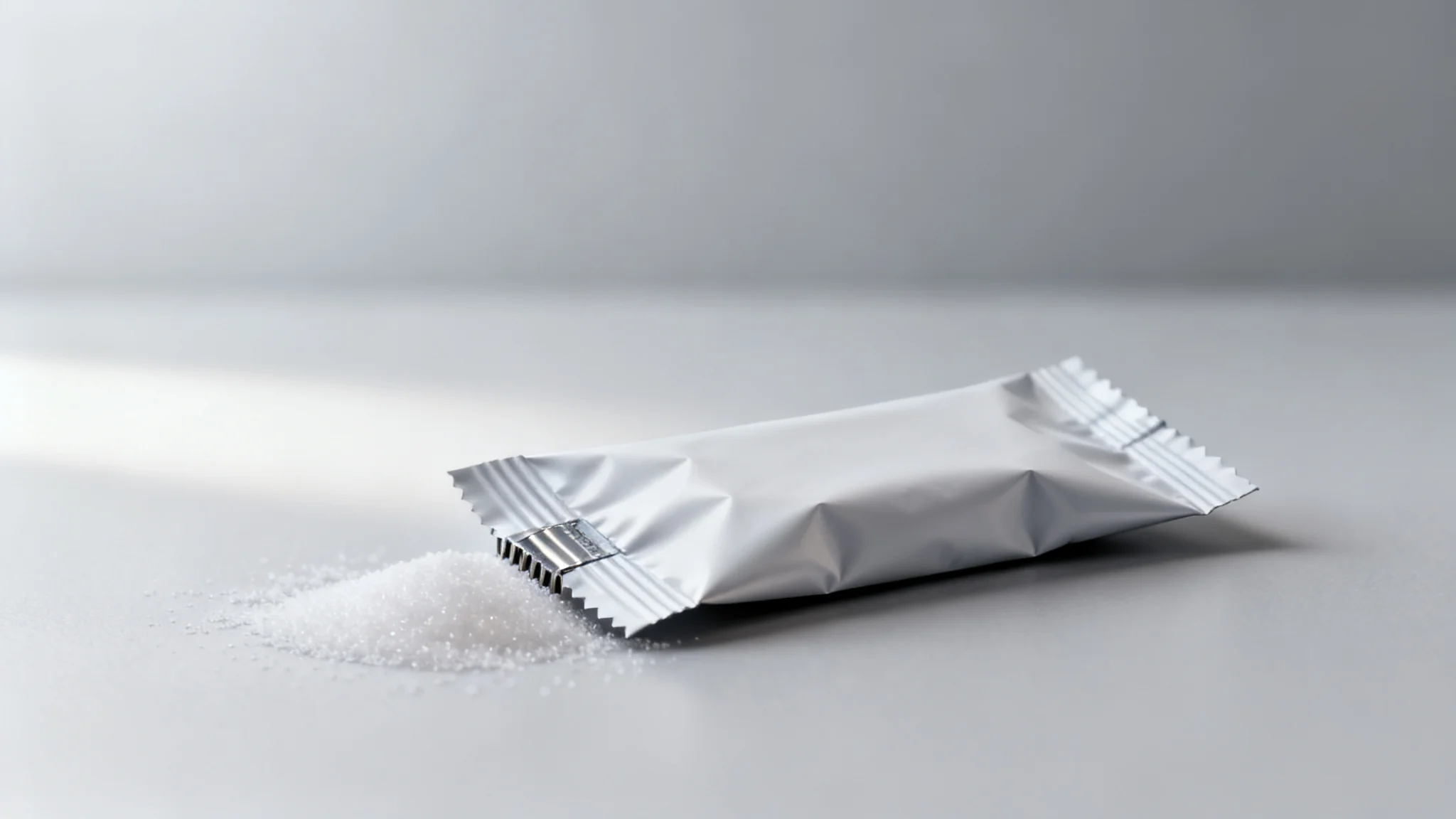
Seal contamination in candy pouches is mostly caused by powder going where it shouldn’t, not by weak film. Sour candies and sugar-powder snacks are especially clear cases. Sugar powder is fine, acidic, and easily absorbs moisture and cakes; once it lands in the seal zone, the seal does not fail completely—it seals most of the way but leaves a channel, invisible to appearance checks and only leaking after transit pressure. So on-site troubleshooting focuses on feeding, static, and seal-zone cleaning. Below, in actionable order, is how to check, fix, and accept.
Key Points
- Seal contamination mostly comes from powder landing points; first check feed height and baffle, then parameters.
- Static affects seal, film travel, and opening at once; confirm the ion-air unit’s working state separately.
- Acceptance must check both strength and integrity; retained samples must cover the whole run period.
Why Do Sour Candies and Sugar Powder Especially Cause Seal Contamination?
Three mechanisms send powder to the seal zone. First, drop rebound: coarse particles hit the product stream and bounce onto the bag’s inner wall above the fill line. Second, static: the finer the sugar powder, the clearer this is; charged particles actively stick to the nearest surface, and the moving film surface is exactly that. Third, post-fill migration: if the pouch vibrates between filling and sealing stations, powder redistributes and moves up.
These three vary in share across formulations. Surface-dusted products—those tumbled with a mix of sour and sugar powder—have far more loose dust than coated confectionery. The same line seals steadily at one size but starts leaking at another mostly because dust amount changed, not because the machine broke.
What Symptoms Does Contaminated Sealing Show
Contamination-type failure rarely shows as the whole seal cracking. Common is a seal that looks continuous but, when peeled, has fine hard spots, or a segment looks darker and not fully fused. Another is contents gradually picking up moisture while the pack looks intact, because the channel is too narrow to see by eye or feel—only detectable by weight loss or taste change.
| Sign | Likely cause | Check first |
|---|---|---|
| Hard spots on peeling, local darkening | Sugar powder or crystals trapped | Feed height, distance from seal line to product surface |
| Intact appearance but contents pick up moisture | Fine channel exists | Integrity test, seal-bar cleaning state |
| Inconsistent within a batch | Static or dust buildup fluctuates with run | Ion air, static measurement, seal-bar clean frequency |
| Suddenly worse after changing size | Dust amount and bulk density changed | Whether fill params are shared across sizes |
What Order to Troubleshoot On Site?
- First peel the failed pouch’s seal to confirm powder trapped vs insufficient temperature—two opposite fixes.
- Record the failed pouch’s position in the production batch: start, stable, or end segment.
- Check feed height, distance from product surface to seal line, and whether pre-seal blow-off works.
- Measure or ask about workshop static, confirm the ion-air unit’s working state.
- Watch the seal bar’s cleanliness over a production run, set a reasonable cleaning cycle.
- Only if all above are stable and it still fails, consider adjusting seal parameters or changing the seal-layer structure.
What Collateral Problems Do Static and Moisture Pickup Bring
Static not only pulls sugar powder to the seal zone but also makes film surfaces attract each other, causing unstable film travel and hard opening; the operator often has to push by hand, which instead brings powder into the seal. Sugar powder that picks up moisture turns sticky and cakes, forming a deposit on the seal bar that hurts heat transfer and leaves marks on later pouches.
These two together also affect the coefficient of friction, showing as the pouch failing to move or suddenly slipping on the machine. The relationship between COF and slip agents is itself a separate troubleshooting direction; if film-travel anomaly and seal contamination appear together, include line friction state in the check rather than staring only at the seal bar.
What Can Be Changed on Equipment and Tooling?
Most changes need no material swap. Adding a baffle or neck-down at the feed mouth reduces powder spill; lowering feed height clearly reduces rebound; adding ion air or low-pressure blow-off before sealing clears floating powder above the product surface. For the seal bar, the key is a fixed and recorded cleaning cycle, not wiping only when it looks dirty.
If the line also makes freeze-dried candy cubes—different shape, more dust—the pouch format and opening position also affect powder landing; compare with the opening and clearance layout of freeze-dried candy window pouches, but the actual landing point must still be measured on your machine.
How to Do Acceptance and Retained Samples
Acceptance must check both strength and integrity, not strength alone. Peel checks find hard spots and dark segments but miss fine channels, so leak checks by integrity methods are also needed. Dye-penetration methods can reference ASTM F1929, which sets test conditions and read-out; in actual use confirm the scope against your product spec before execution.
Retained samples are best taken by shift and production time period, not just the first batch at start-up. Seal problems often build up gradually with run time; only samples covering the whole run show the trend. Retained samples should also record seal parameters and cleaning actions at the same time point, or later review cannot tell where the difference came from.
Conclusion
For seal contamination in sour candy and sugar-powder snacks, first follow the powder path, then consider parameters and material. Feed height, baffle, and ion air are the lowest-cost adjustments and usually the most effective; once the seal-bar cleaning cycle is fixed, batch-to-batch variation clearly shrinks. When the pouch format and opening position need reworking, refer to the overall format logic in candy & snack packaging solutions, then return to the specific product for confirmation on your machine.
Common Questions
Sugar powder lands in the seal zone—will raising the seal temperature hold it?
Not necessarily, and it often makes the problem more hidden. Higher temperature may make the seal look flatter, but the powder is still trapped inside, the channel is not removed, just harder to judge by appearance. Correct order: first reduce powder landing, then confirm the seal parameters match that structure’s window. If raising temperature causes film wrinkle or brittle seal edges, you are already outside the normal window.
In a high-static workshop, is seal contamination worse?
Usually more obvious, especially for fine sugar powder. Charged particles actively adsorb to film and equipment surfaces, not just the seal zone, but also affecting film travel and opening. First confirm the ion-air device works and is aimed at the product surface; then observe the seal failure rate of the same batch before and after static control, using data to judge static’s impact.
What to focus on when inspecting sour-candy pouches?
Focus on the peel state of the seal zone and consistency within the batch, not just appearance. Sampling must cover start, stable, and end segments; after peeling watch for hard spots, dark segments, or unmelted areas. If appearance is normal but contents show moisture pickup, do integrity checking. Record seal parameters and cleaning actions at each sample point for traceability.
Same seal parameters—why fine in the morning but not in the afternoon?
Most common cause is the sugar-dust adhesion layer gradually building on the seal bar, changing heat transfer. This layer lowers the actual temperature reaching the seal face; parameters unchanged yet effect worse. Second is the workshop temperature/humidity varying through the day, affecting sugar powder’s stickiness and static level. Fix: set a fixed cleaning cycle and record it, and include workshop temperature/humidity in daily logs, rather than repeatedly raising temperature to compensate.





