





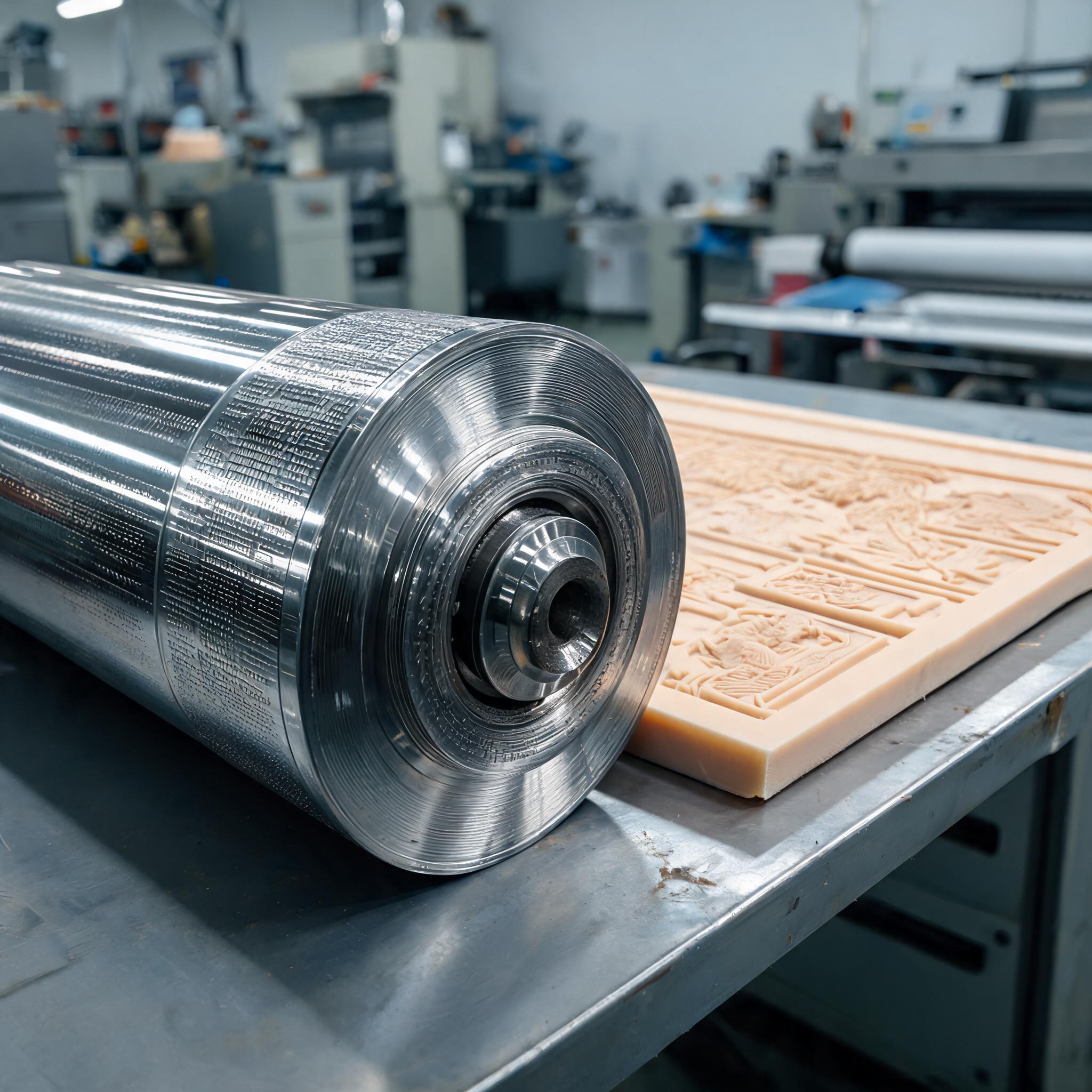
Packaging prepress (plate-making) cost is the part most easily overlooked when comparing supplier quotes. For the same artwork, gravure and flexo plate charges can differ tenfold, and that expense ultimately gets amortized into the unit price of every pouch. Plate-making cost is not as simple as “cylinders are expensive, plates are cheap”—it depends on order volume, number of print colors, cylinder circumference, and whether revisions will be needed later. Below, we break down the structure of packaging plate-making cost using a factory’s actual accounting method, and provide a ready-to-use selection break-even formula.
What Exactly Does Packaging Plate-Making Cost Include?
A complete plate-making investment consists of three parts: the printing plates themselves (gravure cylinders or flexographic photopolymer plates), pre-press file processing and press proofing, and the associated tooling. Gravure requires cylinder shafts and end caps; flexo requires mounting sleeves or double-sided tape. These accessories are inexpensive individually, but the press cannot run without any one of them. Quoting only “price per plate” is meaningless—what really determines total investment is the number of plates and how many times they can be reused: four-color printing means four cylinders or four plates, and each additional spot color adds one more, with cost growing linearly by color count.
Gravure Cylinders: High Unit Price, Fast Amortization
A gravure cylinder is made from a steel base that is copper-plated, electronically engraved, and chrome-plated. Taking a common specification—500 mm circumference and 600 mm width—as an example, domestically produced electronically engraved cylinders are priced at roughly 800–1,500 CNY each, while imported laser-engraved high-line-screen cylinders run 2,000–4,000 CNY each. Cylinder life is very long: a properly maintained chrome-plated cylinder can reliably print over a million impressions, and it is not unusual for a set of cylinders to last three to five years. At million-unit order volumes, the plate-making cost allocated to each pouch is often less than one cent.
The trade-off is time. Gravure cylinder preparation typically takes 3–7 days, and revisions also require re-engraving, leaving almost no room for rush orders.
Flexo Plates: Lower Upfront Cost, but Limits on Life and Screening
Flexo uses photopolymer plates, priced by area. Standard plates of 2.84 mm thickness cost about 0.06–0.12 CNY per square centimeter; an A4-size plate runs roughly 150–400 CNY, and a four-color set is usually 800–2,000 CNY. Plate-making lead time is 1–3 days, with fast proofing and inexpensive revisions—ideal for small-to-medium batches and orders that require frequent version changes.
The limitations lie in durability and fine detail. Flexo plate life typically ranges from 300,000 to 1,000,000 impressions, and is strongly affected by ink, pressure, and wash-up method. High-line-screen dots, gradient transitions, and fine reversed-out text are less stable than with gravure. If the packaging features large gradients or fine artwork above 175 lpi, flexo requires more expensive laser-engraved plates or a switch directly to gravure.
Plate-Making Investment Comparison: Same Order, Two Processes
| Item | Gravure cylinder | Flexo plate |
|---|---|---|
| Unit plate cost | 800–4,000 CNY/cylinder | 150–400 CNY/sheet (A4) |
| Four-color set | 4,000–12,000 CNY | 800–2,000 CNY |
| Lead time | 3–7 days | 1–3 days |
| Impression life | 1,000,000+ impressions | 300K–1M impressions |
| Best for | High volume, long runs | Small–medium volume, multiple versions |
Order Volume Drives the Choice: A Simple Break-Even Formula
Divide the plate-cost difference by the per-unit printing cost difference between the two processes, and you get the break-even quantity. Example: gravure plate-making costs 6,000 CNY more than flexo, while gravure’s per-unit printing cost at high volume is 0.02 CNY lower than flexo’s; then 6,000 ÷ 0.02 = 300,000 units—only above 300,000 units does gravure’s total cost start to win; below that, flexo is more economical. This calculation must be done under the same material structure, same color count, and same pouch format, otherwise the printing-cost difference itself is wrong.
In real quoting you must also consider order sustainability. If a customer places only one order per year, the gravure cylinder amortization falls entirely on that single order; if the brand reorders continuously for three years, the cylinders can be reused and the amortization burden is immediately halved.
Revisions and Reprints: The Hidden Costs Most Easily Missed
Food packaging revisions happen more often than expected: changing flavor, net content, regulatory marks, or promotional copy—any one of these means re-making plates. Revising one flexo plate costs a few hundred CNY; re-engraving one gravure cylinder costs over a thousand; a full four-color revision is four times that. Even more troublesome is cylinder storage: one cylinder weighs over ten kilograms, four per SKU, and hundreds of SKUs fill a whole warehouse—management cost and risk of damage must be factored in.
So when negotiating plate fees, it is best to specify in the contract the pricing method for revisions, the storage period for old cylinders, and scrapping responsibility. For more on plate-opening fees and tooling costs, see Why Custom Packaging Requires Plate-Opening Fees: Tooling Costs and Money-Saving Methods. For the quality and efficiency differences between the two processes, see How to Choose Between Gravure and Flexo Printing and Flexographic Printing Explained.
Frequently Asked Questions
Can the plate-making fee be refunded?
Usually not. Printing plates are custom-made for a specific design and cannot be transferred to other customers, so the industry norm is a one-time charge at order placement. A few factories will refund part of the plate fee once cumulative order volume reaches an agreed threshold, which must be specified in the contract in advance.
Why Do Two Factories Charge Half as Much for the Same Four Colors?
The difference comes from cylinder specifications, engraving method (domestic electronic vs. imported laser), chrome plating thickness, and whether proofing is included. Low-price cylinders often have thin plating and low impression life, and tend to develop scoring lines later in use—which actually increases downtime costs.
Must Small Batches Always Use Flexo?
Not necessarily. Digital printing has no plate-making fee at small volumes, but higher unit price and limited spot and metallic colors. The usual approach: digital for under a few thousand units, flexo for tens of thousands, and gravure for hundreds of thousands and above.
If you are calculating packaging plate-making cost for a product, send us your artwork, color count, and estimated annual usage; HASUPACK will provide a gravure-vs-flexo comparison quote based on your actual order structure, and explain cylinder reuse and storage options. Contact HASUPACK for plate-making and printing quotes. For small-batch, cross-border retail-spec flexible packaging, you can also visit our sister site OMOPACK.





