





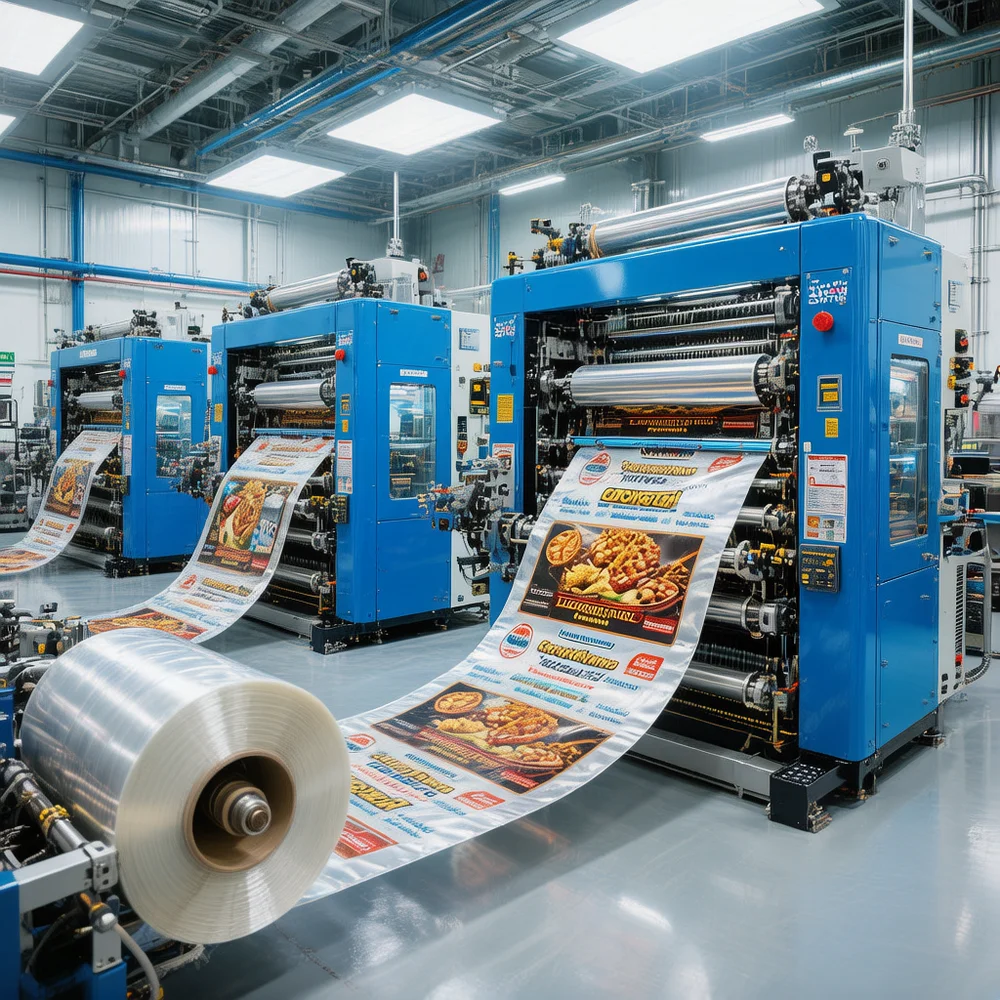
The first step in food packaging pouch customization is not to pick a pouch format, but to clearly define three things: the contents, the filling method, and the distribution conditions. Once these three are fixed, only two or three pouch formats usually remain viable, and the barrier direction of the laminate structure is determined accordingly. Choosing the pouch format first, by contrast, often leads to situations where the filling line cannot run the format, or the product cannot stay on the shelf for the expected period—problems that only surface at the sampling stage.
This article follows the buyer’s decision sequence: first the form of the contents, then the filling method, then the distribution conditions, and finally matching pouch formats to applications, with a checklist of specifications to confirm before placing an order.
Why Food Packaging Pouch Customization Should Not Focus on Pouch Format Alone
A pouch format is only the final form; it carries three constraints. The form of the contents determines what kind of handling the pouch must withstand—powders need dust control, liquids need leak prevention, and sharp-edged products need puncture protection. The filling method determines whether the format can run on existing equipment; premade-pouch lines and form-fill-seal lines run different formats. Distribution conditions determine stacking and drop requirements, that is, how much external force the pouch must bear.
Once these three constraints are laid out, the pouch format often does not need to be “chosen” but is derived. The only real discussion usually left is which of the two or three options that all meet the constraints costs less.
How the Form of the Contents Determines the Pouch Format
Powder products have high flowability and easily enter the sealing area, so the pouch opening needs clearance for cleaning and the inner layer needs some contamination resistance. Granular products are heavy and exert clear pressure on the bottom, so the format must withstand stacking. Liquids and semi-liquids need a spout or flat-bottom structure matched to the pouring method, and the spout diameter must match the viscosity of the contents. Block or slice products care more about the flat layout dimensions and whether shape must be maintained inside the pouch.
Products with high oil content or sharp edges need separate consideration. The former forms an oil film in the sealing area; the latter repeatedly rubs the inner layer during transit vibration. Both types of problems appear first at the seal and pouch corners, not at the center of the pouch face.
Which Pouch Formats Are Ruled Out by the Filling Method
Form-fill-seal lines usually only run continuous formats such as three-side seal and back seal. Stand-up pouches with a resealable zipper and flat-bottom pouches generally require premade-pouch filling equipment. Filling temperature is another exclusion criterion: hot filling demands temperature resistance from the material, retort products need a high-temperature-resistant structure, and ordinary structures lose seal strength at high temperatures.
Line speed and pouch-opening width are equally critical. On high-speed lines dust is obvious and the risk of seal-area contamination rises; too narrow an opening limits filler-nozzle insertion and the actual line speed cannot be reached. These are hard equipment-side conditions that take priority over the design artwork.
How Distribution Conditions Affect Pouch Format and Material
Stacking layers determine the load on the pouch bottom; transport distance and the number of transfers determine drop and vibration intensity; the display method determines whether the pouch must stand or hang. Export products must also consider the temperature-humidity cycle inside containers; condensation can soften paper-based and non-moisture-barrier laminate structures.
When stating such requirements, describe concrete scenarios rather than using adjectives. Information like “four-layer stacked per pallet, two transfers, refrigerated delivery” lets a supplier judge the structure direction directly. For laboratory evaluation methods of transport performance, refer to ASTM D4169 Performance Testing of Shipping Containers.
How to Match Common Pouch Formats to Applications
| Pouch Format | Typical Application | Display & Stacking Traits | Relative Cost |
|---|---|---|---|
| three-side seal pouch | seasoning powder, trial sizes, wipes and other small formats | mainly laid flat, does not stand | Low |
| four-side seal pouch | nori, facial masks, powder and other flat products | flat for easy stacking, even display surface | Medium |
| stand-up pouch (with resealable zipper) | nuts, dried fruit, freeze-dried food, pet snacks | stands upright, opens and closes repeatedly | Medium |
| flat-bottom pouch | specialty coffee, tea, nuts, pet staple food | flat bottom, most stable standing, largest display surface | High |
| side-gusset pouch (side folds) | rice, flour, pet food and other large formats | largest capacity at the same size, relies on stacking | Medium |
| back-seal pouch | puffed food, frozen food, flour | high forming efficiency, suitable for large volumes | Low |
For structural details of the side-gusset pouch, see Side-Gusset vs. Side-Gusset Pouch Comparison. For the basic structure of the three-side seal pouch, see Three-Side Seal Pouch Overview. The stand-up pouch with a resealable zipper is the fastest-changing direction in food packaging pouch customization in recent years; its specifications and structure can be compared on the stand-up pouch product page.
Three Needs Prone to Over-Packaging
The first is stating an excessively long shelf life while the product actually turns over quickly. The extra barrier layers buy no corresponding benefit and only add material cost. The second is equating “premium” with the more complex the structure the better, which adds a sealing interface and more inspection points. The third is choosing a complex format for a very small first batch, where the ability to amortize start-up scrap is limited and the per-pouch cost rises noticeably.
The common point of all three cases is that the need comes from impression rather than scenario. Writing “under what conditions and for how long the product must be stored” as a verifiable condition makes the judgment immediately clear.
Key Takeaways
- First write down the contents, filling method, and distribution conditions; the pouch format is derived, not picked.
- Filling equipment is a hard constraint; stand-up pouches with a resealable zipper and flat-bottom pouches usually require a premade-pouch line.
- Dust contamination in the seal area of powders and inner-layer wear from sharp-edged products are the two most overlooked failure points.
- Shelf-life targets should match the turnover cycle; an excessively high barrier grade is pure cost.
- For a small first batch, prioritize simplifying the structure rather than lowering the material grade.
Pre-Order Confirmation Checklist
- Confirm the form of the contents, oil content, and whether there are sharp edges.
- Confirm the range of pouch formats your current filling line can run, the maximum pouch-opening width, and the line speed.
- Confirm stacking layers, number of transfers, delivery temperature range, and display method.
- Confirm that the food-contact compliance documentation for the inner-layer material matches the product category; you can check the scope against the GB 4806 series standards search page.
- After on-machine sampling, confirm seal strength, pouch-corner shape, and the feel of the zipper or tear notch against the physical sample.
For material and printing pairing options, refer to the specifications on Food-Grade Laminated Film Custom Printing.
Conclusion
The decision order for food packaging pouch customization is contents, filling method, and distribution conditions, with the pouch format last. Projects where all three are clearly specified have a markedly higher chance of passing sampling on the first try. Align shelf-life targets with the actual turnover cycle; for a small first batch, prioritize simplifying the structure rather than reducing base performance. Before placing the order, use on-machine sampling to confirm the seal and pouch corners—this saves more time than repeatedly adjusting the drawing.
Frequently Asked Questions
Can the pouch format be changed later in food packaging pouch customization?
Yes, but the cost is not in the pouch itself but in the supporting materials. Changing the format usually requires reconfirming filling-line compatibility, re-sampling, and rechecking carton specifications and stacking method; changes in outer-carton dimensions also affect the entire logistics parameters. Therefore, fixing the format before the packaging goes live saves far more than optimizing after launch. If a change is truly needed, validate the new stacking and carton plan with a small batch first.
How to choose between a stand-up pouch and a side-gusset pouch for large-format food packaging?
It mainly depends on the display method and per-pouch weight. For products that must stand on the shelf and fall in a medium weight range, the stand-up pouch offers better display. For products with a large per-pouch weight that are mainly pallet-stacked and warehouse-transported in cartons, the side-gusset pouch gives larger capacity at the same size and more compact stacking. If both must be balanced, confirm whether the bottom load capacity meets the stacking-layer requirement.
What special attention does powder food packaging require?
Two directions: dust contamination in the seal area and the contamination-resistant heat-sealing performance of the inner layer. Powder easily falls into the seal area during filling and forms channels that leak, so the pouch opening needs clearance for cleaning and the inner layer should be a structure insensitive to contamination. Another easily overlooked point is static electricity; charged powder adheres to the inside of the pouch opening and affects the consistency of the seal appearance.
What material compliance documents should be prepared?
Food packaging pouch customization requires at least two types of documents. One is the food-contact material declaration of conformity matched to the product category, and the other is the test report related to migration or residues. The specific test items are determined by the material and contact conditions; what must be checked is whether the document’s scope covers the actual use conditions, such as the type of food contacted, temperature, and contact time. Complete documentation does not equal applicability—this is the most easily overlooked point in review.





