





Frozen food packaging and ambient food packaging may both look like flexible packaging pouches, but their selection logic is entirely different. We often see customers apply a structure designed for ambient snack pouches to quick-frozen dumplings — samples pass testing at room temperature, yet after a month in the cold store the seal edges crack, the pouch body turns brittle, and leaks appear after thawing. The problem is not the printing; it is that material, structure, and acceptance criteria were never considered separately.
This article explains the differences between frozen and ambient food packaging in real-use scenarios, so you can settle on a direction before requesting a quotation.
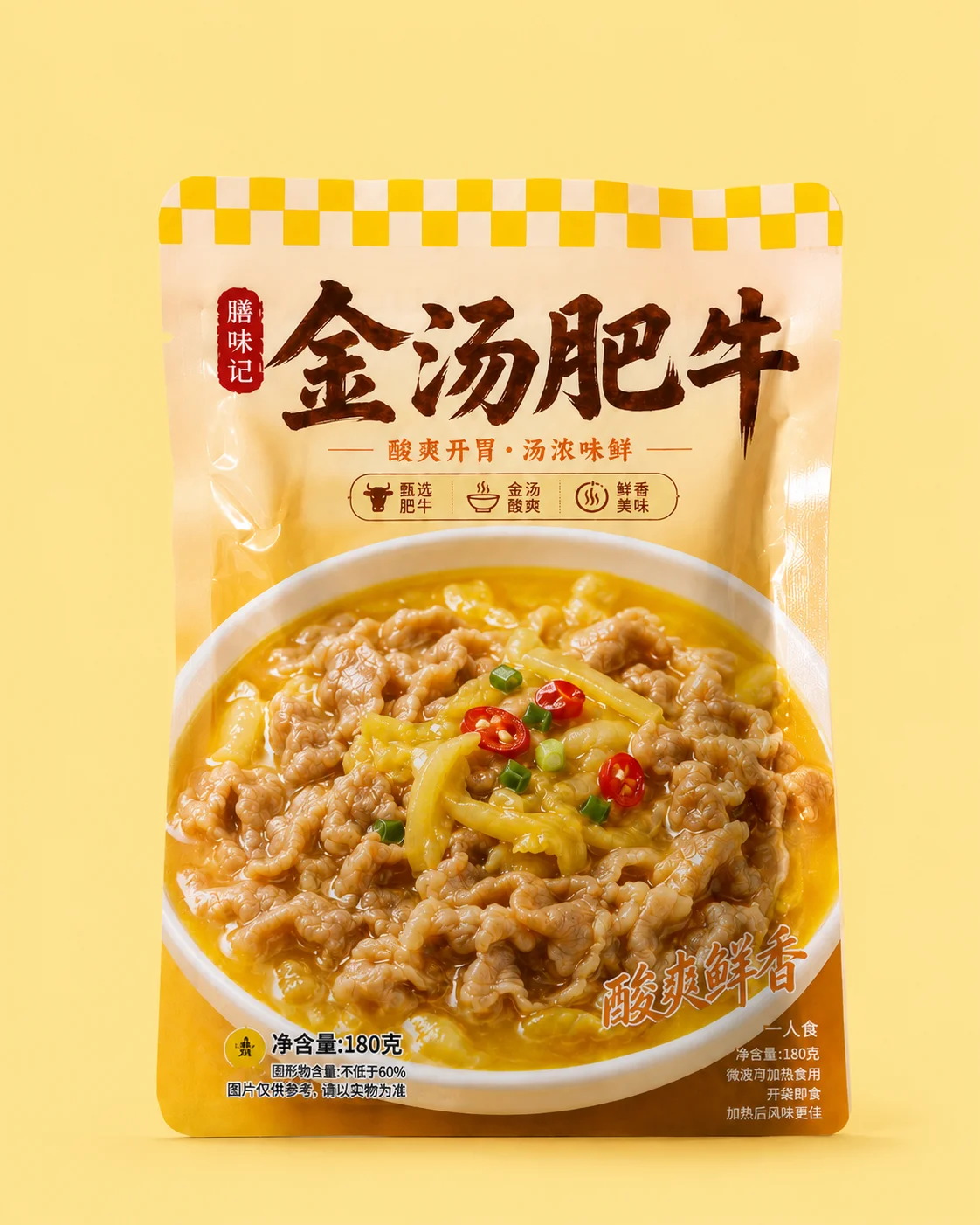
1. First, distinguish the failure mechanisms each product type faces
The main threats to ambient food packaging are oxygen, moisture, and light, so it cares more about whether the barrier layer is thick enough and whether the light-blocking design is adequate. Frozen food packaging faces a different set of challenges: low temperatures reduce film flexibility, and below -18℃, ordinary PE layers become noticeably brittle; frozen products also collide and stack under pressure during transport, so the pouch must additionally withstand ice-crystal puncture and drop impact.
The conclusion is straightforward: for frozen food packaging, the top priority is low-temperature flexibility and puncture resistance; for ambient food packaging, the top priority is barrier and light protection. Reversing the order means spending cost without getting the result.
2. How to choose materials: treat low-temperature performance and barrier separately
Common structures for frozen food packaging
Common solutions are PET/PE or PA/PE. The low-temperature impact strength and puncture resistance of the PA (nylon) layer are clearly superior to ordinary PET, and deep-freeze scenarios at -30℃ or even -40℃ essentially rely on the PA layer to hold up. For the inner heat-seal layer, we recommend a low-temperature heat-seal PE with a lower seal-initiation temperature, which is less likely to scorch the film during pouch making.
Common structures for ambient food packaging
Ambient food packaging commonly uses PET/AL/PE, PET/VMPET/PE, or paper-plastic laminates. The core is barrier performance: choose aluminum foil or metallized structures for oxidation-sensitive products, and add a separate moisture-barrier layer for moisture-sensitive ones. Related approaches can be found in Moisture-Proof Packaging Materials Explained.
3. Structural design: three points most often underestimated for frozen pouches
The first is seal width. The seal of frozen food packaging is usually 2 to 3 mm wider than that of ambient pouches, because at low temperatures the heat-seal layer flows less, and a narrow seal easily develops leakage channels. The second is puncture resistance: products with bones, shells, or sharp edges need a thicker inner layer or a co-extruded film. The third is stacking pressure and drops: frozen products are heavy once boxed, so the pouch format should avoid sharp folds, otherwise the burst usually occurs at the corners.
4. The focus of ambient food packaging: light protection and oxidation control
Ambient storage means a longer shelf life, typically 6 to 12 months. During this period, oxygen permeation and light-induced aging are the main risks, so the packaging structure should be derived backward from the required shelf life rather than copied from competitors. If the product is sensitive to color and flavor, consider pairing it with oxygen absorbers or nitrogen flushing.
5. Cost and common mistakes
Modifying an ambient pouch for frozen use may look like saving material cost, but it actually shifts the risk to after-sales: once bursts or leaks appear at the consumer end, the compensation and return costs far exceed the savings. Conversely, using a high-barrier aluminum foil structure for short-term frozen products is also a clear waste.
The three most common mistakes are: testing only at ambient temperature without low-temperature outbound testing; ignoring seal integrity after thawing; and not confirming the dart-drop impact data of the packaging at -18℃.
6. Recommended acceptance methods
For frozen food packaging, we recommend at least three tests: a -18℃ low-temperature drop test, a low-temperature seal-strength test, and a leak check after freeze-thaw cycles. For ambient food packaging, the focus is migration testing and accelerated shelf-life testing. At the pouch-format level, you can also refer to the structural suggestions in How to Choose Low-Temperature Freezing Packaging Bags.
7. Clarify your requirements before requesting a quotation
Preparing the following information will make the quotation much more accurate: product form (dry or wet, with or without bones or sharp edges), storage temperature and duration, single-pouch weight after filling, mode of transport, and whether full-format printing is needed.
Neither frozen nor ambient food packaging is superior — only more or less suitable. If you are selecting packaging for frozen or ambient products, feel free to contact us and send over your product details; we will provide structural suggestions based on real-use scenarios. You can also first look at OMOPACK’s https://www.omopack.com to understand packaging approaches for similar products.





