





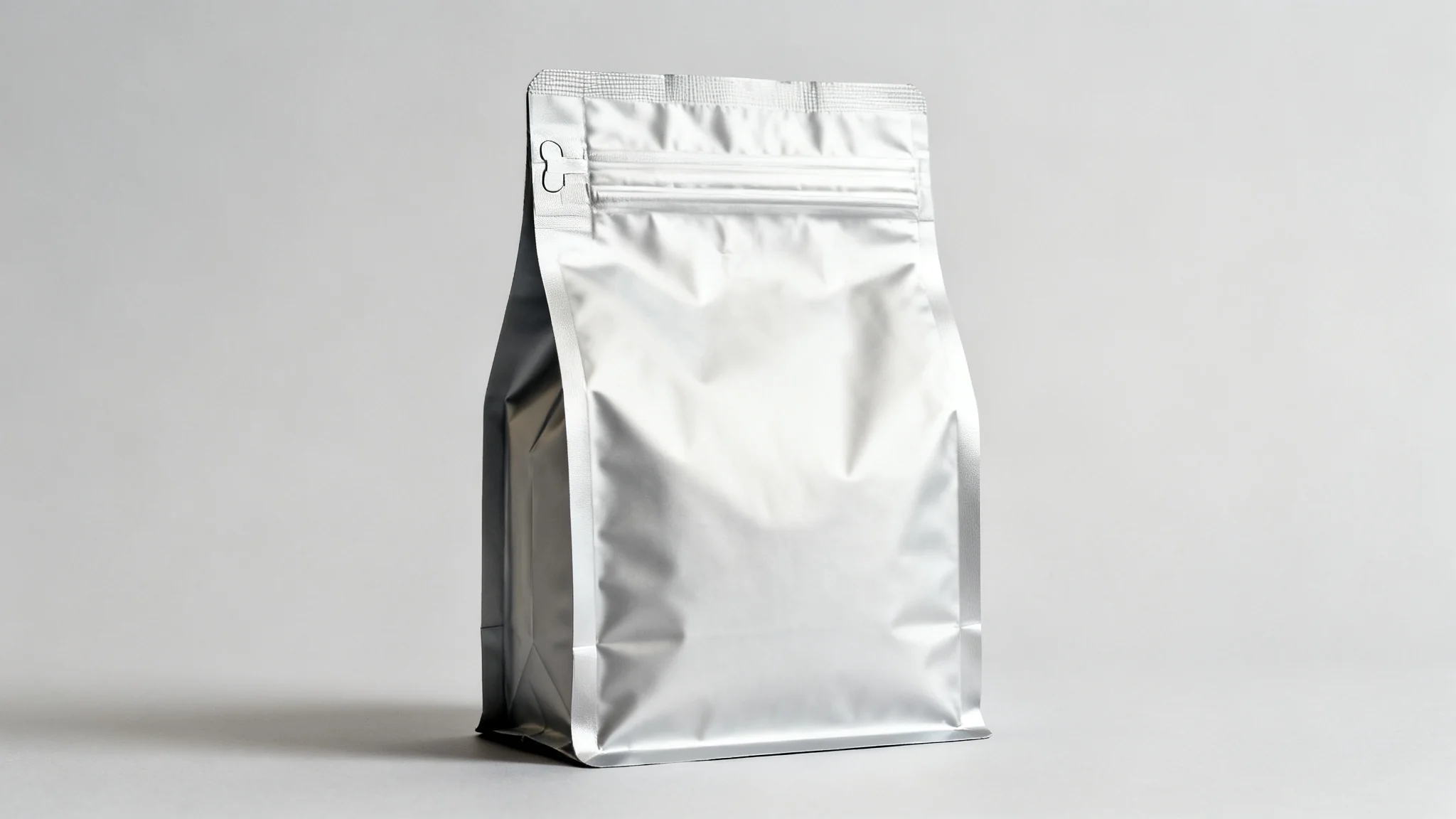
Plate Cost Is Only the Starting Point: How to Calculate the Cost of Small-Batch Coffee Packaging
Brands asking factories for quotes on small-batch coffee bags often fixate on one number: the plate cost. Hearing “digital printing needs no plate” they assume it is cheap; hearing “gravure needs plates” they assume it is expensive. But anyone who has actually compared prices knows that what really decides whether the order pays off is the combination of plate cost and unit price, the number of versions, and reprint risk. Written from the perspective of domestic brands and food factories, this article clarifies how to choose a printing method for small-batch coffee bags: where digital printing saves, where it costs more, when it is worth using, and when traditional printing is actually the better fit.
How Plate Cost Is Built, and Why Traditional Printing Cannot Avoid It
Traditional gravure printing requires an engraved cylinder for each print color. The cylinder is customized to the artwork and can be reused as long as the artwork stays the same. This implies two things: a one-time investment when the order is placed, and no repeat of that investment on subsequent repeat orders. Another feature of the cylinder is its lead time–plate making must queue, and new orders placed during peak season see their delivery stretched out.
Flexographic printing has lower plate cost than gravure, but its rendering of fine gradients and small text is not as good as gravure’s. So choosing the traditional route is itself a question: high volume with stable artwork amortizes the plate cost well; low volume or frequently changed artwork turns the plate cost into a sunk cost.
Where Digital Printing Saves and Where It Costs More
Digital printing has no cylinders; the artwork goes straight from file to press, so it saves three things: plate cost, plate-making time, and plate-change cost. In exchange, its unit price is higher than gravure at the same scale–and this gap widens as quantities rise. In short:
- Save: low total investment for sampling and first order; near-zero cost to switch between versions; short cycle from finalized artwork to delivery with no plate-making queue;
- Cost: per-bag printing cost is higher than traditional processes; the total-cost gap is significant at very high volumes; some special processes (such as certain metallic effects) render differently from traditional printing.
So the answer to “is digital printing cost-effective for small-batch coffee bags” is not a one-liner, but three calculations.
Calculate Three Accounts Before Judging
Calculation One: The True Annual Demand per Artwork
Note that it is the volume per artwork, not the total order volume. A design that sells well and repeats, versus twelve designs each produced once in small runs, are completely different businesses. The former, after amortizing plate cost, has a lower unit price under traditional printing; the latter carries no plate-cost burden under digital printing, and versions do not have to wait on each other.
Calculation Two: Number of Versions and Obsolescence Risk
For new-product trials, seasonal editions, competition beans, and similar scenarios, an artwork’s lifecycle may be only a few weeks. Under traditional printing, once the cylinders are made, if the artwork is not reordered the plate cost is sunk; unsold bags in stock are also a loss. The advantage of digital printing is print-on-demand–print as many as you sell–so the cost of trial and error is small.
Calculation Three: The Hidden Cost of Reprints
The most common predicament with small-batch orders is “the first run sells out, but the reprint cannot wait.” Traditional printing must re-schedule production for a reprint, while digital reprints are relatively flexible. Factoring the reprint cycle into the decision, many cases that leaned toward traditional printing switch to digital–conversely, if sales are stable and reprints are regular, traditional printing’s overall cost still wins.
More Than Cost: Color, Sampling, and Pouch Format Must Be Confirmed Together
Once the printing method is decided, the work on the bag itself is not reduced. The material direction must match the beans’ freshness window; aluminum foil, metallized film, and mono-material each have their use cases–for the specific differences see our earlier coffee bag material selection. Beans filled right after roasting need a one-way degassing valve; the relationship between valve position and the filling line is explained in our degassing valve guide. If it is ground coffee powder, the barrier and sealing requirements differ again–see barrier priorities for coffee powder packaging.
During sampling, verify three things closely: first, color–digital printing color differs from the screen proof, so confirm on a physical sample; for brand standard colors, it is best to do an extra color-tuning round at the sampling stage. Second, sealing–the sample bag should be test-sealed at the actual filling parameters; seal strength has a standard test method, such as the industry-common ASTM F88/F88M seal-strength test (ASTM F88/F88M). Third, artwork-to-feature clearance: the positions of valves, zippers, and tear notches must clear the artwork, which is the same under any printing process.
Conclusion
For small-batch coffee bags, the sensible way to judge digital printing is: first clear the three calculations using “annual demand per artwork x number of versions x reprint frequency,” then compare the total cost of the two processes at the same bag specification, and finally use sampling to confirm color, sealing, and clearance. The value of digital printing is lower trial-and-error cost and shorter lead time, not being unconditionally cheaper; the value of traditional printing is the unit price at stable high volume, not being “outdated.” Which fits depends on what stage your business is at–a conclusion that can only be reached after the math is done. Doing the math before asking for quotes is far more useful than haggling between two quotations.
Frequently Asked Questions
For small-batch coffee bags printed digitally, can the color match the brand standard?
Most colors can, but it must be confirmed on a physical sample, not a screen proof. Digital printing’s color performance is close to traditional four-color printing; if the brand color is far from the common gamut, or cross-batch consistency is critical, do an extra color-calibration round at the sampling stage. Where metallic effects and certain special processes are involved, the rendering differs from traditional printing, so align expectations with the factory in advance to avoid discovering appearance differences at full production.
How should plate cost and unit price be compared together to be meaningful?
Put the two curves on the same chart: traditional printing’s “plate cost + unit price x quantity” versus digital printing’s “unit price x quantity,” find the cost crossover point of the two processes, then compare against your true order quantity per artwork. Also factor in plate-making lead time and reprint frequency, because delayed delivery and inventory buildup are real costs. Comparing on unit price alone, or on plate cost alone, almost always yields the wrong conclusion in small-batch scenarios.
Can digitally printed small-batch coffee bags run on an automatic filling line?
Yes, provided the film’s stiffness, coefficient of friction, and heat-seal layer are set to the filling line’s parameters, not to the printing method. Digital printing mainly changes how the artwork appears; the bag’s performance on the line depends on the film roll’s physical metrics and the seal-layer formulation. The correct order is to first pin down the filling machine model, target speed, and sealing parameters, then have the factory recommend film against those conditions and run a sampling trial; mass production after a passed trial avoids the vast majority of on-line problems.
Besides color, what else should be checked at sample confirmation?
Beyond color, the key points are whether the seal was tested at the actual filling parameters; whether the valve position clears the seal edge and the artwork; whether the zipper heat seal is secure; and whether the pouch format and dimensions match the artwork with filling margin left. Color is only a cosmetic issue, whereas seal and valve errors affect whether the whole batch is usable. It is recommended to run the sampling stage against the full-production inspection standard, catching problems before full production.





